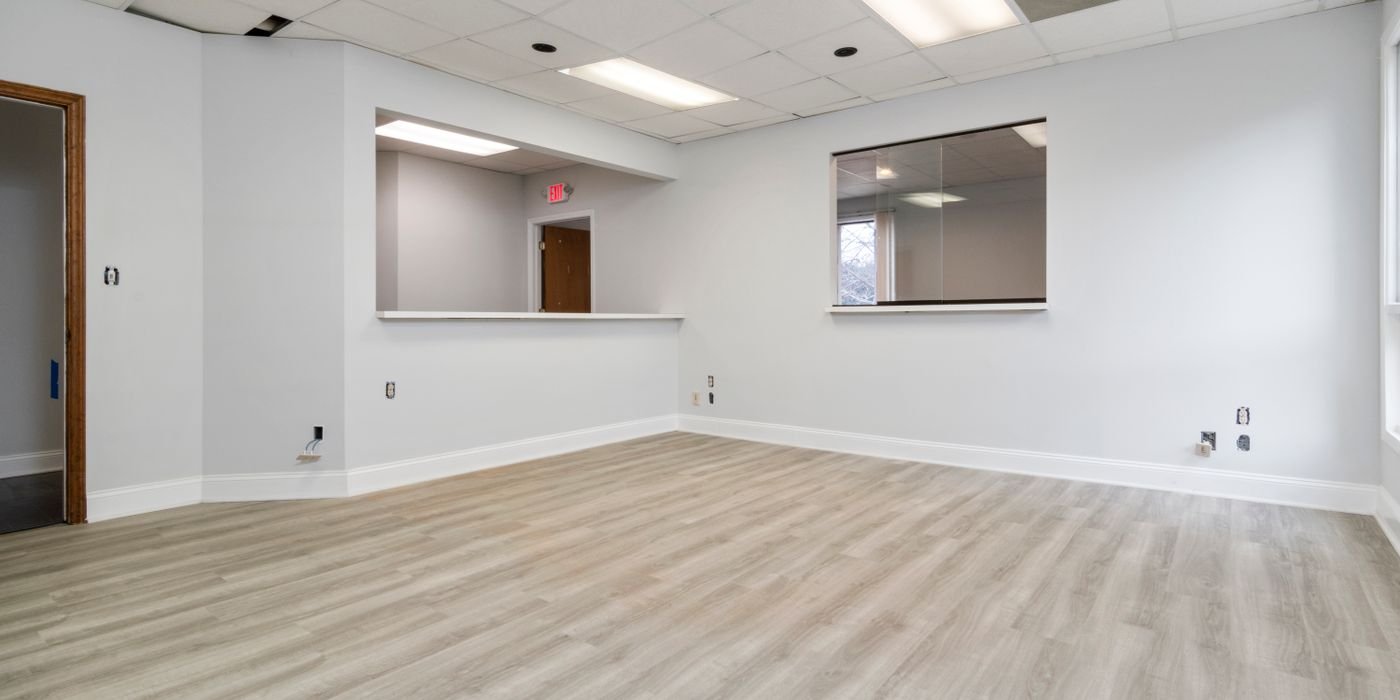
When a lease comes up for renewal, or when a company has simply grown into a space that no longer works for how it operates, the choice is usually renovation rather than relocation. A well-executed home office refurbishment in Dubai can transform a dated fit-out into a contemporary, efficient workspace for 40–60% of what a full new fit-out would cost — provided the existing structure is sound and the scope is clearly defined before contractors step on site.
I have managed both types of projects across Dubai, Sharjah, and Abu Dhabi over the past decade. The renovation projects are, in my experience, consistently harder to deliver on time and on budget than new fit-outs — not because the scope is larger, but because the unknowns are harder to price. Here is what to expect.
What type of renovation are you doing?
The single most important decision is scope. Office renovation covers a wide spectrum, and where your project falls on that spectrum determines the permit pathway, the timeline, and the budget almost entirely.
Paint, carpet or luxury vinyl, lighting fixtures, soft furnishings. No structural changes. Minimal permit exposure. 4–6 weeks for 1,000–2,000 sqft.
New partitioning showroom, suspended ceiling replacement, HVAC upgrade, new flooring throughout, joinery refresh. DM permit required. 8–12 weeks.
Complete strip-back to shell, full MEP redesign, bespoke joinery, new finishes throughout. Equivalent to a new fit-out in scope. 12–18 weeks.
Heritage buildings and premium Grade A towers can add 20–40% to these figures, primarily due to restricted working hours, enhanced dust containment requirements, and material sourcing constraints.
The full cost breakdown
A renovation budget is not just the construction cost. These are the line items that tend to catch tenants off guard:
| Cost Line | Typical Range (AED/sqft) | Notes |
|---|---|---|
| Strip-out & disposal | 10–20 | Demolition of existing fit-out; skip hire; authority-compliant disposal. Higher in buildings with restricted site access. |
| Partitioning & ceilings | 30–60 | New drywall partitions, suspended grid ceilings, acoustic panels. Bespoke glass partitioning at the higher end. |
| Flooring | 20–55 | LVT/carpet tiles at the low end; polished concrete or stone at the high end. |
| MEP (electrical, HVAC, plumbing) | 35–80 | Largest variable. HVAC reconfiguration is expensive; if existing ductwork can be reused, cost drops significantly. |
| Joinery & built-ins | 25–70 | Reception desks, kitchen/pantry units, storage walls, meeting room credenzas. |
| Finishes, lighting & FF&E | 20–50 | Decorative lighting, window treatments, loose furniture. Often excluded from contractor scope — budget separately. |
| Authority approvals & fees | 5–15 | DM fit-out permit, Civil Defence NOC, building management fees. Higher in regulated buildings. |
| Design, PM & supervision | 10–18% | Of construction cost. Inseparable from delivery quality — the biggest lever on whether the budget holds. |
| After-hours premium | +15–25% | Applicable to work scheduled evenings or weekends to keep the office operational. Not always avoidable. |
What renovation costs more than a new fit-out
This is the question tenants ask most often, and the answer is worth being direct about. Three things genuinely cost more in a renovation than in a new build:
Unknown MEP conditions
In a shell-and-core new fit-out, you know exactly where every conduit and duct is going because you are installing them. In a renovation, the as-built MEP documentation may not exist, may be inaccurate, or may reveal surprises the moment you open up the ceiling — undersized power distribution, non-compliant earthing, HVAC that was modified without a permit. Discovering this mid-project adds cost and time that is very difficult to predict at tender stage. A proper pre-renovation MEP survey, conducted before pricing is finalised, is not optional — it is the difference between a contingency of 10% and one of 25%.
Restricted working hours
If the office stays occupied during renovation, noisy and dusty trades — demolition, drilling, concrete cutting — are typically restricted to evenings (after 6pm) and weekends. In TECOM, DIFC, and similar managed districts, the building management often imposes their own restrictions on top of the municipality's. This compresses the programme and can add meaningfully to labour costs. Factor a 15–25% after-hours premium on any works that cannot be done during daytime hours.
Asbestos and legacy materials
Buildings constructed before 2000 — and some from the early 2000s — may contain asbestos-containing materials in ceiling tiles, insulation, or floor adhesives. A pre-renovation asbestos survey is mandatory in many managed buildings and advisable in all cases. Remediation, if required, adds AED 20–40/sqft to the affected areas and requires specialist licensed contractors. This is non-negotiable: improper asbestos disturbance carries significant health and legal liability.
Dubai Municipality approvals for office renovation
The permit question depends directly on the scope of your works.
When a DM fit-out permit is required
Any works that alter the existing layout — moving partitions, replacing ceilings, modifying HVAC distribution, or changing the fire suppression or detection layout — require a Dubai Municipality fit-out permit before works begin. The application is submitted through DM's Ejari/NOC system or via a registered engineering consultancy, and typically takes 2–4 weeks for approval. Working without a permit exposes the tenant to stop-work orders and fines, and can complicate the landlord's certificate of completion when the lease ends.
When structural or building modifications are involved
If you want to remove or alter a load-bearing element — unlikely in a standard office renovation, but not unheard of in open-plan conversions — you need a structural engineer's report and a NOC from the building owner before DM will accept the application. Allow an additional 2–3 weeks for this pathway.
Civil Defence re-approval
Any change to the fire detection and alarm layout, suppression system, or emergency lighting requires Civil Defence re-approval. This runs concurrently with the DM process in most cases but is a separate submission. A competent fire consultant or MEP engineer who is familiar with Civil Defence requirements is essential here — gaps in the submission are the most common cause of delays.
In free zone buildings (TECOM, DIFC, DAFZA and others), the free zone authority adds its own NOC layer on top of DM. Build an additional 1–2 weeks into the programme for this, and confirm the building management's requirements early in the design stage.
Phasing the renovation around a live office
Relocating 60 staff for three months while an office is renovated is expensive and disruptive. Most mid-scale renovations in Dubai are phased to keep the office partially operational throughout, and this is an area where project management capability matters enormously.
Zone-by-zone sequencing
The office is divided into zones, typically three or four, based on functional groupings. Zone 1 is completely vacated (usually the area furthest from the entry, to allow contractor access without crossing live workspaces) and fully renovated. Staff from Zone 1 are temporarily accommodated in Zone 4. Once Zone 1 is complete, staff migrate to the newly finished space, and Zone 2 is released to the contractor. This cascade continues until the full floor is done.
The sequencing has to account for MEP — particularly HVAC, which is rarely zoned to match the renovation phasing, and electrical distribution, which may require temporary power solutions while the permanent switchgear is upgraded. A clear timeline with dependencies mapped out before works start prevents the situation where two trades are competing for the same ceiling void at the same time.
Dust and noise management
Temporary hoarding using 12mm MDF on a timber frame, sealed with acoustic foam at the top, is the standard solution for separating live and active construction areas. This manages noise reasonably well — a drilling team on one side and a call at normal volume on the other — but it is not acoustically perfect. For businesses where absolute quiet is operationally critical (legal chambers, financial trading floors, recording studios), the honest recommendation is a full temporary relocation for the noisiest phases.
Reinstatement: the cost that many tenants overlook
Almost every commercial lease in Dubai includes a reinstatement clause requiring the tenant to return the space to its pre-let condition — typically 'white box' or 'shell and core' — at the end of the lease. This means removing the entire fit-out: partitions, suspended ceilings, raised floors, MEP modifications, and all finishes.
Strip-out and disposal at lease end typically costs AED 15–25/sqft for a standard office fit-out. For a 3,000 sqft office, that is AED 45,000–75,000 — a material number that is rarely budgeted for at the time the renovation is commissioned.
The practical response is to plan reinstatement from the design stage. This means documenting all MEP modifications thoroughly so the reinstatement contractor knows what was original and what was added; using demountable partition systems where possible; and specifying raised flooring with a clean edge detail that allows removal without damage to the structural floor slab. A project manager who has delivered both the fit-out and the reinstatement understands this cycle in a way that a design-only firm typically does not.
How to get the budget right from the start
The most reliable way to price a renovation accurately is a pre-construction survey conducted by the team who will actually build it. This means an MEP engineer opening the ceiling and recording what is there, a structural check of any walls proposed for removal, and a condition survey of the existing finishes that will be retained. Skipping this step in favour of a desktop estimate almost always produces a number that shifts materially once works start.
Beyond the survey, the single most effective cost control measure is fixing the scope before going to tender. Scope changes mid-renovation are expensive in any project, but they are particularly so when the contractor is working in restricted hours around a live office — every variation is billed at premium rates and carries timeline implications that ripple through the phasing plan.
V Square's model — managing design, procurement, and delivery under a single project manager — means the person who prepared the MEP survey is the same person supervising the MEP contractor on site. That continuity is what keeps a renovation budget from drifting.
Planning an office renovation in Dubai?
We start with a pre-renovation survey — MEP condition check, scope definition, permit assessment — so your budget is built on what is actually there, not what the drawings say.
Book a Survey →Frequently asked questions
How much does office renovation cost in Dubai in 2026?
Expect AED 120–160/sqft for a cosmetic refresh (paint, flooring, lighting), AED 160–220/sqft for a partial refurbishment (new partitions, ceilings, HVAC upgrade), and AED 220–320/sqft for a full refurbishment including MEP redesign and joinery replacement. Heritage or Grade A premium buildings add 20–40% to these ranges due to restricted working hours and material constraints. Strip-out, authority approvals, design, and project management fees are additional — budget a further AED 25–50/sqft for these combined line items.
Do I need DM approval for an office renovation in Dubai?
Yes, for any works that alter the existing layout — partitioning, ceilings, MEP, fire systems. A Dubai Municipality fit-out permit is required before works begin and typically takes 2–4 weeks. Structural modifications require a NOC from the building owner and a structural engineer's certification. Civil Defence re-approval is needed if the fire strategy changes. In free zone buildings, an additional free zone authority NOC is required.
Can I renovate my office while it is still occupied?
Yes, through zone-by-zone phasing. The office is divided into sections and renovated one zone at a time, with staff relocated within the floor. Noisy and dusty trades are scheduled for evenings and weekends. Temporary hoarding separates the construction zone from the live workspace. This approach adds 15–25% to the timeline compared with an unoccupied renovation, but avoids the cost and disruption of temporary relocation.
What are reinstatement obligations at the end of a Dubai office lease?
Most commercial leases in Dubai require tenants to return the space in 'white box' or 'shell and core' condition — removing all partitions, ceilings, raised flooring, and MEP modifications. Strip-out and disposal costs AED 15–25/sqft. Planning reinstatement from the design stage — using demountable systems, documenting all MEP changes — significantly reduces this end-of-lease cost.
What is the difference between office renovation and a full new fit-out?
A full fit-out starts from a bare shell with no partitions, no ceilings, and exposed MEP. A renovation works within an existing fit-out, upgrading or replacing elements while retaining the structural shell and (usually) the main MEP distribution. Renovation typically costs 40–60% less than an equivalent new fit-out, but introduces unknowns — concealed MEP conditions, legacy materials in older buildings — that new builds do not carry. A pre-renovation survey is essential to price these unknowns accurately.
Figures are market estimates for 2026 based on V Square project experience and should be confirmed through a site-specific survey and contractor pricing before committing to a budget.