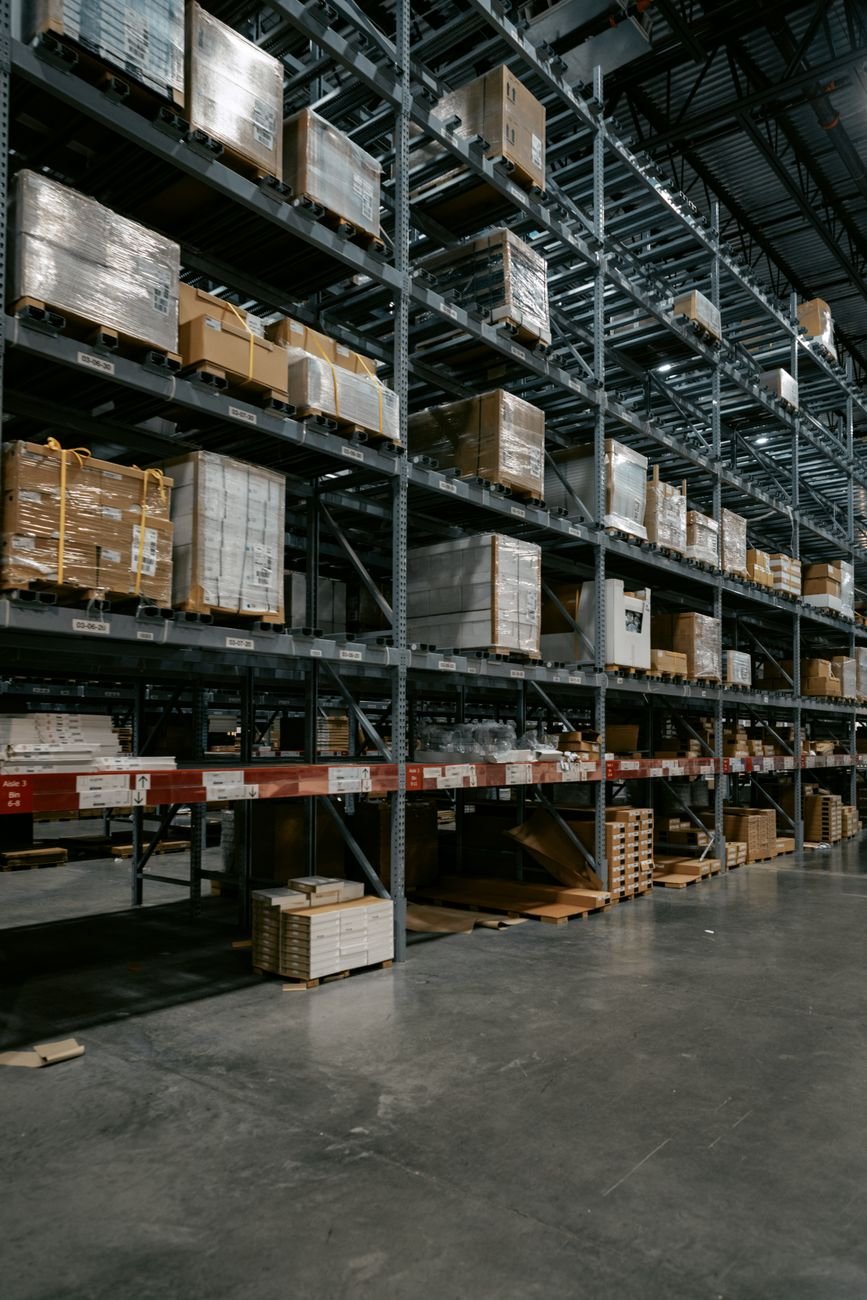
A warehouse fit-out is not simply painting walls and installing a few shelves. In the UAE, where industrial zones span from JAFZA and DIP in Dubai to KIZAD in Abu Dhabi and SAIF Zone in Sharjah, a fit-out project has to satisfy multiple authority layers simultaneously: the landlord, the industrial zone authority or Dubai Municipality, and Dubai Civil Defence for fire safety. Get the sequence wrong and you end up with a completed fit-out waiting weeks for a DCD inspection that cannot begin until the DM permit is closed — a delay that has cost more than one client their lease commencement date.
This guide covers what a warehouse fit-out actually entails, how costs break down by warehouse type, what the authority approval process looks like on mainland versus free zone, and the design decisions that separate a functional warehouse from one that actively supports operational efficiency.
What a Warehouse Fit-Out Includes
Unlike an office or retail fit-out fit-out, a warehouse project has to balance heavy-duty civil and MEP infrastructure with operational logic — the physical layout directly determines how fast goods move through the facility. The core scope of a warehouse fit-out in the UAE typically covers the following elements.
Flooring
Industrial epoxy or polyurethane floor coatings are standard, applied over the existing concrete slab. A good coating system costs AED 18–35/sqft and handles forklift traffic, chemical resistance and the thermal cycling that comes with UAE temperature extremes. Heavy-duty operations moving loaded forklifts over 5 tonnes use hardener-treated power-float finishes instead. Floor marking lines for traffic lanes, pallet zones and safety exclusion areas are included in this scope.
Mezzanine Floors
A structural mezzanine is one of the highest-value interventions in a warehouse fit-out — it effectively doubles usable floor area without increasing the lease footprint. Standard mezzanine construction in the UAE costs AED 120–180/sqft of mezzanine area, including steel structure, flooring deck, staircases and handrails. DM requires a structural engineer's stamped drawings before issuing the building permit, and Civil Defence will review means of escape — typically requiring two staircases for mezzanines above 300 sqm. This adds 2–3 weeks to the approval timeline but is non-negotiable.
Partitioning and Office Areas
Most warehouses incorporate a ground-floor or mezzanine-level office component for operations management, reception and welfare facilities. Standard dry-wall office partitioning within the warehouse costs AED 180–260/sqft of office area — considerably more per sqft than the warehouse shell itself, because it involves suspended ceilings, data and power points, HVAC and finishing to a higher standard. Welfare requirements under UAE labour law — separate male and female washrooms, a prayer room and a canteen or pantry — must be included in the design from day one.
Racking and Storage Systems
Racking itself is typically a procurement item rather than a fit-out cost, but racking selection directly drives fit-out decisions. Selective pallet racking (single-deep) is the most common configuration in UAE warehouses and allows immediate access to every pallet — useful for high-SKU-count operations. Double-deep and drive-in racking increase storage density at the cost of selectivity, and are typically chosen by 3PL operators maximising cubic utilisation. Whatever system is selected, the fit-out contractor must coordinate with the racking supplier early, because floor anchor point positions, aisle widths and bay heights all need to be fixed before flooring is applied.
MEP: Lighting, Ventilation and Power
UAE warehouse MEP has two distinct challenges: heat and dust. Ambient summer temperatures in an unconditioned warehouse can exceed 50°C, making even basic tasks dangerous without adequate ventilation. Evaporative coolers (desert coolers) are the cost-effective solution for large open bays and cost AED 8,000–15,000 per unit installed. For higher-specification facilities, ducted split systems or precision cooling for temperature-sensitive goods move costs up significantly. LED high-bay luminaires at 150–200 lux average are the standard lighting specification for pick-and-pack operations, with separate emergency lighting circuits meeting Civil Defence requirements.
Warehouse Types and Cost Tiers in the UAE
Cost varies substantially by warehouse type. A bonded logistics hub is a different project from a cold storage facility or a light manufacturing unit, even if the four walls are the same size.
Dry storage, logistics or distribution. Epoxy floor, basic lighting and ventilation, fire detection. Minimal partitioning. Suitable for bulk goods, trading or light assembly.
Warehouse plus mezzanine office and welfare block. Includes racking coordination, upgraded MEP, DM building permit for mezzanine. Most common configuration for UAE SME operators.
Chilled (0–8°C) or frozen (−18°C to −28°C) facilities using PIR/PUR insulated panels, dedicated refrigeration plant, floor heating elements and DCD cold-chain compliance inspections.
Cost Breakdown Table — Mixed-Use Warehouse (5,000 sqft example)
| Item | Estimated Cost (AED) | Notes |
|---|---|---|
| Epoxy floor coating (5,000 sqft) | 90,000–140,000 | 2-coat system, forklift-rated |
| Mezzanine office (800 sqft) | 145,000–210,000 | Steel structure + office fitout |
| MEP — lighting, power, ventilation | 80,000–130,000 | LED high-bays + evap coolers + DB |
| Fire detection + suppression | 60,000–100,000 | DCD-compliant sprinklers + alarm |
| Partitioning + welfare block | 45,000–75,000 | Washrooms, prayer room, pantry |
| Authority approvals + consultant | 18,000–28,000 | DM, DCD, DEWA fees + drawings |
| Total (approx.) | 438,000–683,000 | AED 88–137/sqft blended rate |
These figures are from projects completed in Dubai's Al Quoz and DIP industrial zones in the first half of 2026. Free zone projects in JAFZA or SAIF Zone can run 10–15% higher due to the authority's own consultant requirements and mandatory use of approved contractor lists.
Layout Planning: How to Design a Warehouse That Actually Works
The layout is where most warehouse fit-outs succeed or fail before a single wall goes up. The fundamental principle is flow — goods should move from receiving dock to storage to dispatch in a logical, non-crossing path that minimises forklift travel distance and human error.
The Three-Zone Model
Effective warehouse layouts in the UAE divide the floor plate into three primary zones. The inbound zone sits at the receiving docks and includes staging space for unloading, goods inspection and QC, and inbound label scanning stations. The storage zone occupies the majority of the floor, with racking rows oriented perpendicular to the dock doors to allow direct forklift access from the aisle to the rack face. The outbound zone at the opposite or adjacent end handles pick staging, packing benches, outbound labelling and dispatch holding. Keeping these zones physically separated — even with simple floor marking — dramatically reduces errors and near-miss incidents.
Aisle Widths
Aisle width is determined entirely by the forklift type. Counterbalance forklifts need 3.5–4 m aisles for safe turning radius. Reach trucks reduce this to 2.7–3 m, recovering significant storage area. Very narrow aisle (VNA) systems can operate in 1.6–1.8 m aisles but require wire-guided or rail-guided trucks and a higher capital investment. For most UAE SME warehouse operators, reach trucks with 2.7 m aisles represent the best trade-off between density and equipment cost.
Authority Approvals: Mainland vs Free Zone
The approval route for a warehouse fit-out depends entirely on location. Getting this wrong — submitting to DM for a JAFZA property, or missing a Trakhees requirement for a Palm Jumeirah facility — wastes weeks and draws penalty notices.
Dubai Mainland (DM + DCD)
Warehouse fit-outs on Dubai mainland require a DM fit-out permit, submitted via the Building Permit System (BPS) portal. Architectural and MEP drawings must be prepared by a DM-accredited consultant and uploaded with the application. If the scope includes a mezzanine, a separate building permit for the structural works is submitted simultaneously — the two cannot be merged. Once DM issues the fit-out permit, Civil Defence (DCD) reviews the fire safety drawings separately, including sprinkler hydraulic calculations and emergency egress paths. DEWA approves any electrical load increase. Total government fees on a 5,000 sqft warehouse in Dubai typically land between AED 15,000–25,000 across all authorities.
Free Zones: Trakhees, JAFZA, SAIF
Free zone warehouses have their own authority structures. In JAFZA and the broader Ports, Customs and Free Zone Corporation (PCFC) territory — including Jebel Ali, Dubai Maritime City and parts of the Palm — Trakhees is the approving authority for fit-out works, replacing DM entirely. Trakhees has its own approved consultant and contractor lists, and submissions go through the Trakhees portal. SAIF Zone in Sharjah uses its own engineering department. KIZAD in Abu Dhabi falls under KEZAD Group authority. Free zone approval timelines can be faster than DM in some cases, but mandatory use of zone-approved contractors sometimes limits competitive tendering.
For a full breakdown of the fit-out approval process and timeline management, see our guide on office fit-out timelines UAE 2026 — many of the authority sequencing principles apply equally to industrial projects. Our fit-out services page also outlines how V Square manages the approval process on behalf of clients across UAE zones.
Fire Safety in UAE Warehouses: What Civil Defence Requires
Fire safety is the area where warehouse fit-outs most commonly fail inspections, because the requirements are directly tied to racking height and storage density — variables that sometimes change between design and construction. Getting a DCD NOC then modifying the racking layout without updating the fire drawings is a compliance failure that holds up occupancy certificates.
Sprinkler Systems by Rack Height
For racking under 3 m, ceiling-level wet-pipe sprinklers with hydraulic calculations submitted to DCD are standard. For racking between 3–6 m, DCD typically requires higher design density — more sprinkler heads per unit area — and may require intermediate-level in-rack sprinklers at the 3 m level. High-bay storage above 6 m almost always requires both ceiling-level and in-rack sprinklers, with the hydraulic design reviewed by a DCD-accredited fire consultant. Any change to rack height after DCD approval requires a drawing revision and re-inspection — a step that many warehouse operators skip and then find themselves unable to renew their operating licence.
Hassantuk and Fire Alarm
All UAE commercial and industrial buildings must connect their fire alarm system to Hassantuk — the national centralised fire monitoring network. The connection requires a licensed Hassantuk integrator, and the DCD operating permit will not issue without confirmed connectivity. Budget AED 8,000–15,000 for the Hassantuk connection on top of the panel and detector installation.
Project Management: Sequencing a Warehouse Fit-Out
The biggest risk on a warehouse fit-out is not cost — it is sequencing. A missed step at the authority approval stage can sit a completed fit-out idle for three weeks, with lease running and operations unable to start. The correct sequence is: design completion → DM/Trakhees and DCD submissions in parallel → DM permit received → begin civil works (flooring, partitioning) → DCD inspection mid-works → DCD NOC → MEP final test and DEWA clearance → occupancy certificate → handover.
Racking installation typically happens after occupancy — it is a tenant's own equipment, not part of the authority-approved fit-out drawings, unless the racking exceeds 6 m height and triggers the in-rack sprinkler requirement. If it does, racking drawings must go back to DCD before installation. This is a sequencing trap that catches clients who order racking independently of the fit-out contractor.
For complex projects with multiple trade packages running in parallel, proper project management makes the difference between hitting the handover date and sitting in a two-month overrun. We have managed warehouse fit-outs from 3,000 sqft SME facilities in Al Quoz to 50,000 sqft logistics hubs in SAIF Zone, and the sequencing discipline is identical regardless of size. See also our overview of fit-out cost benchmarks across commercial property types in UAE 2026 for comparison against office and retail fit-out economics.
Frequently Asked Questions
How much does warehouse fit-out cost in the UAE in 2026?
Warehouse fit-out in the UAE costs AED 80–150/sqft for a basic industrial interior, AED 150–280/sqft for a mixed-use warehouse with mezzanine office and racking infrastructure, and AED 280–450+/sqft for cold storage or specialist controlled-temperature facilities. These figures cover internal fit-out works and exclude civil shell construction, racking procurement and loose equipment.
What authority approvals are needed for a warehouse fit-out in the UAE?
On Dubai mainland, a DM fit-out permit plus a DCD fire safety approval and DEWA electrical clearance are required. In JAFZA and Trakhees-zone free zones, Trakhees replaces DM. SAIF Zone, KIZAD and other free zones have their own authorities. Allow 3–5 weeks for standard submissions and budget AED 12,000–30,000 for total government fees across authorities.
Do warehouse mezzanine floors require a separate approval in Dubai?
Yes. A mezzanine floor is treated as a structural addition and requires a DM building permit with stamped structural drawings from a licensed UAE engineer. Civil Defence also reviews means of escape — two staircases are typically required for mezzanines above 300 sqm. Allow an additional 2–3 weeks compared to a fit-out without a mezzanine.
What fire safety systems are required in UAE warehouses?
Automatic wet-pipe sprinklers are mandatory. Rack heights under 3 m need ceiling-level sprinklers with hydraulic calculations. Racking between 3–6 m requires higher design density; above 6 m typically requires in-rack sprinklers as well. All warehouses need a Hassantuk-connected fire alarm panel, emergency lighting and exit signage. DCD will not issue an NOC without confirmed Hassantuk connectivity.
How long does a warehouse fit-out take in the UAE?
Standard warehouse fit-outs take 8–14 weeks from design completion to handover — 2–3 weeks design, 3–5 weeks approvals, 3–6 weeks construction. Cold storage adds 3–4 weeks for panel installation and refrigeration commissioning. Mezzanine projects sit at the upper end of the range. The most common cause of delay is incomplete authority drawings at submission, which triggers a re-submission cycle of 1–2 additional weeks per round.
Planning a Warehouse Fit-Out in the UAE?
V Square manages end-to-end warehouse fit-outs across Dubai, Sharjah and the UAE — from layout design and authority approvals to mezzanine construction and handover.
Get a Free Consultation