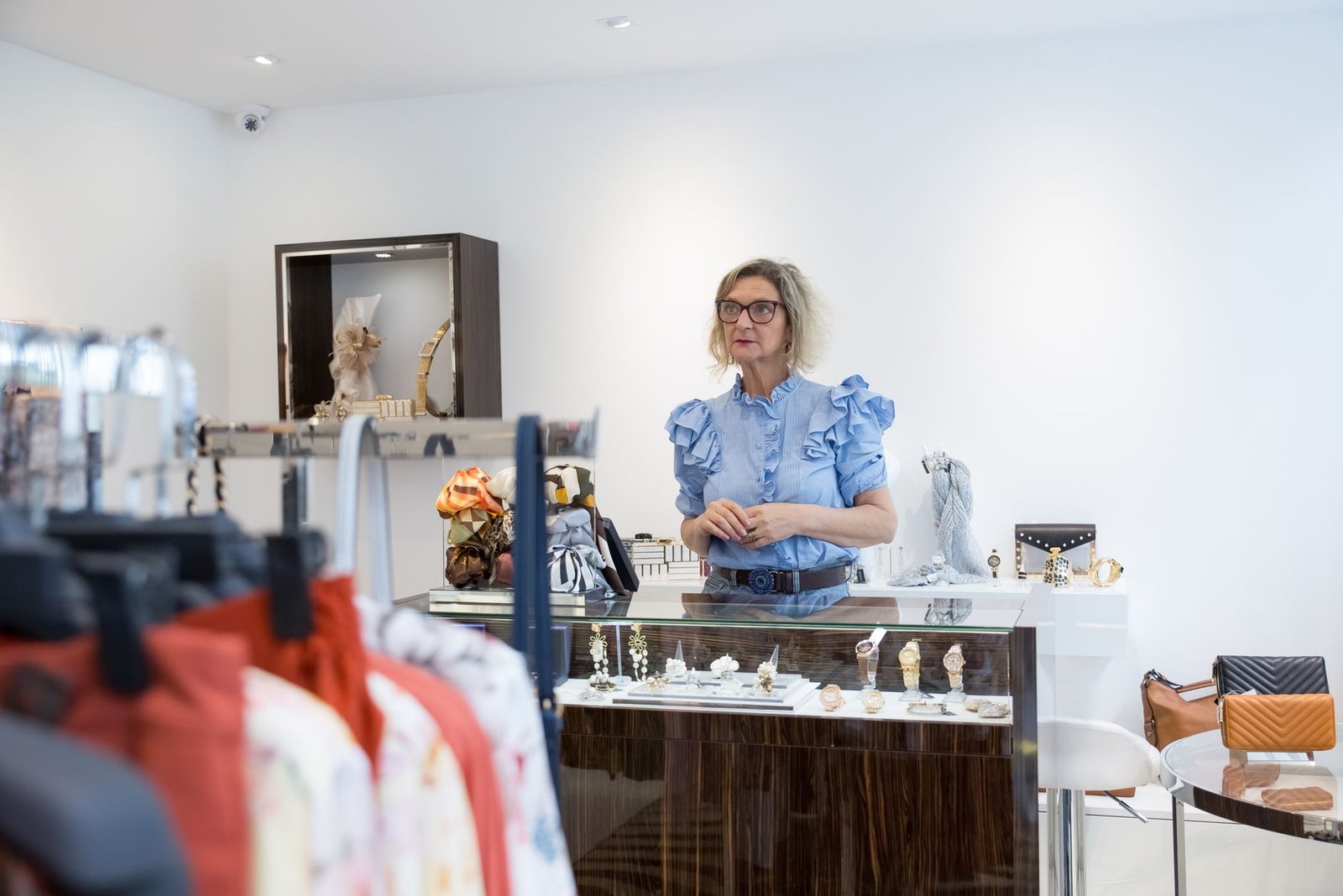
Dubai has more retail floor space per capita than almost anywhere in the world. The competition for footfall inside a single mall corridor is not about price or product range; at the street level, it is entirely about how a store looks, feels and pulls people through the entrance. A retail fit-out in the UAE is commercial infrastructure — and the budget decisions made at brief stage determine whether that infrastructure works for or against you for the next three to five years.
I've been coordinating retail restaurant projects across Dubai and Sharjah for over a decade, from small kiosks in community malls to multi-floor flagship showrooms in prime retail destinations. The budget mistakes I see repeatedly are almost never about overspending — they are about misallocating. Owners spend heavily on finishes that customers walk past without noticing, and underspend on lighting and display that actually drive dwell time and purchase. This guide gives you the honest cost structure for 2026, the approval sequence you need to plan around, and the design choices that consistently produce return on investment.
What Drives Retail Fit-Out Cost in Dubai
Retail category and store size
A kiosk in a community mall and a 2,000 sqft flagship fashion store have almost nothing in common from a fit-out perspective. Kiosks and pop-up formats (typically 50–150 sqft) are built to a fixed mall template with limited scope for customisation — costs are low but so is design freedom. A boutique of 200–600 sqft has the most cost-per-sqft pressure because every element is visible from the entrance. Showrooms and destination retail above 1,000 sqft benefit from spatial efficiency — a larger footprint can carry the same quality of joinery and lighting at a lower cost-per-sqft because the fixed-cost elements (design fee, permits, project management) are amortised across more space.
Mall-based versus high-street versus standalone
Location type is the most underestimated cost driver in retail fit-out. A mall unit in an Emaar, Majid Al Futtaim, or Aldar development comes with a tenant fit-out guide that prescribes materials, finishes, signage zone dimensions, structural restrictions, and sometimes specific approved contractors. These guidelines exist to maintain the mall's overall aesthetic standard — and they typically push costs upward because they prohibit the cheapest material options and require a developer design review before DM submission. High-street units and standalone stores offer more design freedom and shorter approval chains, but they carry their own complexity: building management NOCs, shared services infrastructure, and stricter requirements for shopfront signage compliance under Dubai's Signage and Advertising Regulations.
Materials, finishes, and technology integration
The cost gap between standard and premium retail fit-out is almost entirely materials and technology. At the standard level, you are specifying engineered timber flooring, modular metal shelving systems, LED track lighting and digital signage on standard mounts. At the premium level, you move to marble or stone feature flooring, custom lacquered joinery, architectural lighting designed to the specific ceiling geometry, embedded interactive display technology, and bespoke furniture. Each step up compounds: custom millwork takes longer to fabricate, requires more precise installation, and typically needs imported hardware unavailable locally. Technology integration — smart lighting systems, large-format LED display walls, RFID-enabled stock management infrastructure — adds AED 50,000–200,000 to a mid-size fit-out depending on scope.
Cost Breakdown by Retail Category (Dubai, 2026)
| Retail Type | AED/sqft Range | 500 sqft Store (Indicative Total) | Key Cost Drivers |
|---|---|---|---|
| Kiosk / Pop-Up (mall) | AED 350–600/sqft | AED 180,000–320,000 | Mall template compliance, branded fascia, display counter |
| Basic Boutique / Value Retail | AED 500–800/sqft | AED 260,000–430,000 | Standard shelving, laminate/vinyl flooring, track lighting, signage |
| Standard Fashion / Lifestyle Store | AED 800–1,200/sqft | AED 430,000–650,000 | Custom joinery, quality flooring, feature lighting, brand-specified finishes |
| Premium Boutique / showroom | AED 1,200–1,700/sqft | AED 650,000–920,000 | Stone / hardwood, bespoke millwork, architectural lighting, digital displays |
| Luxury / Flagship Retail | AED 1,700–2,500+/sqft | AED 920,000–1,350,000+ | Imported marble, custom furniture, interactive technology, art installation |
Figures are construction and joinery costs for the fit-out shell. Design fees (typically 8–12% of construction value), DM permit fees (AED 1/sqft, min AED 200), and project management (10–15% of construction value) are additional. Mall stores may also carry a performance bond deposit, typically AED 5,000–30,000, returned after snagging sign-off.
One number worth knowing for budgeting conversations with contractors: the gap between a mid-range quote and a premium quote is almost never in the labour rate. UAE fit-out labour costs are relatively consistent across registered contractors. The gap is in materials procurement — specifically whether the contractor is specifying from a local catalogue or sourcing to your exact specification from international suppliers. Always ask for a line-by-item bill of quantities, not a lump-sum quote.
The Approval Sequence for a Dubai Retail Fit-Out
The approval process for retail in Dubai is shorter than for F&B, but it still catches operators by surprise when they encounter the developer design layer on top of the standard DM process. Here is the actual sequence for a mall or high-street store:
1. Mall or landlord NOC and design approval
For any mall-based unit — including developments by Emaar, Majid Al Futtaim, Aldar, Meraas, and Nakheel — the first submission is to the developer's design team, not DM. The developer reviews your proposed fit-out against their Tenant Design Criteria document and issues a design approval or a list of non-compliance items. This process takes 5–15 working days and must complete before you submit to DM. Submitting to DM with drawings that have not passed the developer's review wastes the permit fee if changes are subsequently required. For high-street and standalone units, the landlord NOC is usually simpler — 3–7 days — but is still required.
2. DM Fit-Out Permit (BPS portal)
All interior works require a DM Fit-Out Permit submitted via the BPS (Building Permit System) portal. In 2026, all submissions are processed through an automated AI compliance scan under the Al Sa'fat 2.0 sustainability and building code framework before reaching a human reviewer. Drawings must be prepared by a DM-registered engineering firm; drawings from non-registered firms are rejected at submission. The official DM fee is AED 1 per sqft (minimum AED 200). With a complete, compliant submission, permit turnaround is typically 5–10 working days.
3. Civil Defence clearance
Required if the fit-out modifies the unit's fire alarm system, emergency lighting, exit routes, or installs any fire suppression equipment. In many mall units the base-build fire infrastructure is already in place and the fit-out does not trigger a new Civil Defence review — but any partition work that changes escape routes or covers a sprinkler head does. Confirm this with your contractor before tendering; Civil Defence clearance can add 5–10 working days if required.
4. Signage permit
Exterior signage and branded shopfront elements require a separate DM Signage Permit, distinct from the fit-out permit. This is one of the most commonly overlooked approvals in retail projects and can delay a store launch if the signage installation is planned without it. Allow 5–10 working days. For mall stores, the developer's design approval for signage runs concurrently with the general design review in step 1.
5. Trade licence alignment
The fit-out scope and the trade licence activity must match. A licence for trading in fashion goods cannot legally be used to operate a café counter from the same unit, even if the space is physically built out for it. This is most relevant for concept stores and showrooms with ancillary hospitality elements. Confirm the activity list on the licence covers everything in the fit-out scope before drawing preparation begins — a licence amendment can add 2–4 weeks to the pre-opening timeline.
For a detailed look at how commercial approval timelines work across different project types, our office fit-out timeline guide covers the BPS sequencing logic in depth.
Design Trends Driving Retail in Dubai 2026
Experience-led zoning
The shift from passive display to active experience is the defining change in UAE retail design over the past three years and it has now reached stores at the standard fit-out level, not just flagships. The most effective implementations do not require interactive technology: they are about spatial choreography — a discovery zone near the entrance, a try-on or test area with specific lighting and mirror placement, a dwell zone where customers pause rather than pass through. Designing for dwell time consistently outperforms designing for maximum product density. Stores that treat every sqft as display area reduce purchase time and eliminate the conditions that lead to browsing.
Cultural integration in premium retail
The design language that is performing best in Dubai's premium retail segment combines Arabic architectural reference with contemporary restraint. Mashrabiya-pattern screens used as product display dividers, geometric tile inlays at entrance thresholds, warm gold hardware, and natural stone in honey and sand tones — used as punctuation rather than decoration — read as unmistakably local without sliding into pastiche. International brands entering the UAE market are increasingly briefing this requirement explicitly. Domestic brands that ignore it in favour of importing a generic international aesthetic are losing a differentiator that costs relatively little to build.
Modular and flexible display systems
Fixed joinery locks a store into a single layout for the duration of the fit-out — typically three to five years. Modular display systems allow a retailer to reconfigure for seasons, campaigns, and inventory changes without mobilising a contractor. The upfront cost of quality modular systems (AED 800–1,500 per linear metre for mid-range) is higher than fixed shelving, but the total cost of ownership over a five-year fit-out lifespan is consistently lower when reconfiguration cost is included. For brands with active seasonal collection rotations, this is one of the highest-return design decisions in the brief.
Technology integration as standard, not premium
Digital display screens were a premium-only feature in UAE retail three years ago. By 2026 they are standard in fashion, beauty and electronics stores across all market segments. Large-format LED walls behind product displays, interactive product discovery screens, and smart lighting systems that shift colour temperature by zone are now expected in new store fits in major malls. The specification range is wide: a basic digital display installation can be delivered for AED 15,000–40,000; an integrated smart store with dynamic zoned lighting and interactive stations runs AED 150,000–400,000 for a 500–1,000 sqft store. The key is specifying the infrastructure — conduit, power points, data network — at fit-out stage, even if the technology is installed later. Retrofitting cabling through finished ceilings and walls costs two to four times more than roughing it in during construction.
Typical Retail Fit-Out Timeline (Dubai, 2026)
| Phase | Duration | Key Outputs |
|---|---|---|
| Design concept and documentation | 2–3 weeks | Space plan, joinery drawings, material schedule, developer submission package |
| Developer / landlord design approval | 1–3 weeks (run from day 1) | Developer NOC, design approval, permitted signage zones confirmed |
| DM Fit-Out Permit + Civil Defence + Signage | 2–3 weeks (parallel to above) | DM permit issued, Civil Defence clearance (if required), signage permit |
| Contractor tendering and award | 1–2 weeks (concurrent with approvals) | 3 compliant quotes, contractor award, programme agreed |
| Fit-out construction (partitions, MEP, finishes, joinery) | 3–6 weeks (boutique); 6–10 weeks (showroom / flagship) | Shell completed, joinery installed, flooring, lighting, MEP commissioned |
| Signage installation and technology fit-out | 1 week (last phase) | Shopfront signage, digital displays, smart lighting activated |
| Snagging, developer inspection, handover | 3–5 days | 0% snagging sign-off, developer final inspection, performance bond returned |
Minimum realistic timeline for a 200–500 sqft mall boutique: 8–10 weeks. A 1,000–2,000 sqft showroom with custom joinery and developer design review: 12–18 weeks. The operators who open on schedule start the developer design approval process on the same day they brief the designer — not after the DM permit is issued.
What to Ask Before Signing a Retail Fit-Out Contractor
Dubai's fit-out contracting market for retail is large and uneven in quality. These questions identify the contractors who know what they are doing:
- Are you DM-registered and does your lead engineer hold a current DM practitioner registration? Drawings from non-registered firms are rejected at BPS portal submission. Confirm this before scoping begins, not at tender stage.
- Have you previously worked in this mall or with this developer's design team? Contractors who know the specific developer's tenant design criteria submission process move through the approval stage two to three weeks faster than those encountering it for the first time.
- Does your quote include MEP modifications and the DM permit fee, or exclude them? A quote that excludes MEP, permit fees, and project management can look 20–30% cheaper than a fully inclusive quote while costing more in total. Always compare on a like-for-like scope.
- Can you provide three completed retail references from the last 18 months with contact details? Not portfolio images — references you can call. Ask specifically about the snagging process and whether the project opened on the agreed programme date.
- What is your quality control process for joinery installation? Custom joinery accounts for 30–50% of fit-out cost in most retail projects and is the element most subject to poor site installation. The right answer involves off-site factory inspection, templating visits, and a structured snag list at installation completion.
For projects above AED 500,000 fit-out value, engaging an independent project manager to handle contractor tendering, programme tracking, and authority submissions typically recovers its fee within the first three weeks by shortening the approval cycle. Our project management services cover retail fit-out from design brief through to handover and opening day.
Planning a retail store fit-out in Dubai?
We manage retail fit-out projects from concept design through DM approvals and contractor delivery — design coordination, developer submissions, budget tracking, and on-site supervision. Tell us about your store and we'll arrange a no-obligation consultation.
Book a free consultationFrequently asked questions
How much does a retail fit-out cost in Dubai in 2026?
Retail fit-out in Dubai costs AED 500–800 per square foot for a basic store (standard shelving, laminate flooring, track lighting), AED 800–1,200 per square foot for a standard fit-out (custom joinery, quality flooring, branded lighting), and AED 1,200–2,000+ per square foot for premium or luxury retail. A 500 sqft standard boutique typically runs AED 450,000–650,000 all-in including design fees, permits and contractor costs. Design fees are an additional 8–12% of construction value and project management a further 10–15% if engaged separately.
What approvals are needed for a retail fit-out in Dubai?
A retail fit-out in Dubai requires a DM Fit-Out Permit via the BPS portal, Civil Defence clearance if fire systems are affected, a mall or landlord NOC and developer design approval for mall units, a DM Signage Permit for shopfront elements, and trade licence alignment to confirm the fit-out activity matches the licensed activity. Allow 3–6 weeks for all approvals running in parallel. For mall units, the developer design approval must precede the DM submission.
How long does a retail store fit-out take in Dubai from design to opening?
Most retail fit-outs of 200–600 sqft take 8–12 weeks from design brief to opening day. The timeline is: 2–3 weeks concept design, 2–4 weeks approvals (running concurrently with tendering), and 4–6 weeks on-site construction. Flagship stores and showrooms with custom joinery or imported finishes take 12–18 weeks. The fastest route to opening is starting the developer and DM approvals before the fit-out contract is signed, not after.
Is a DM Fit-Out Permit mandatory for retail shops in Dubai?
Yes — any internal modification to a retail unit requires a DM Fit-Out Permit via the BPS portal. This includes new partitions, ceiling works, MEP modifications, joinery, flooring and signage fixtures. The DM fee is AED 1 per sqft (minimum AED 200). In 2026, all BPS submissions go through an AI compliance scan under the Al Sa'fat 2.0 framework. Work commenced without a valid permit is subject to stop-work orders and may require reinstatement before a permit will be issued.
What are the key retail design trends in Dubai for 2026?
The main retail design trends in Dubai for 2026 are experience-led zoning (designing for dwell time, not just product density), cultural integration using Arabic geometric reference and warm natural materials, modular display systems that allow seasonal reconfiguration without full fit-out renovation, and technology integration — digital display walls, interactive product screens and smart lighting — now standard in fashion, beauty and electronics stores. Sustainability compliance under Al Sa'fat 2.0 is also influencing material specification across all retail categories.