What Does a False Ceiling Cost in Dubai in 2026?
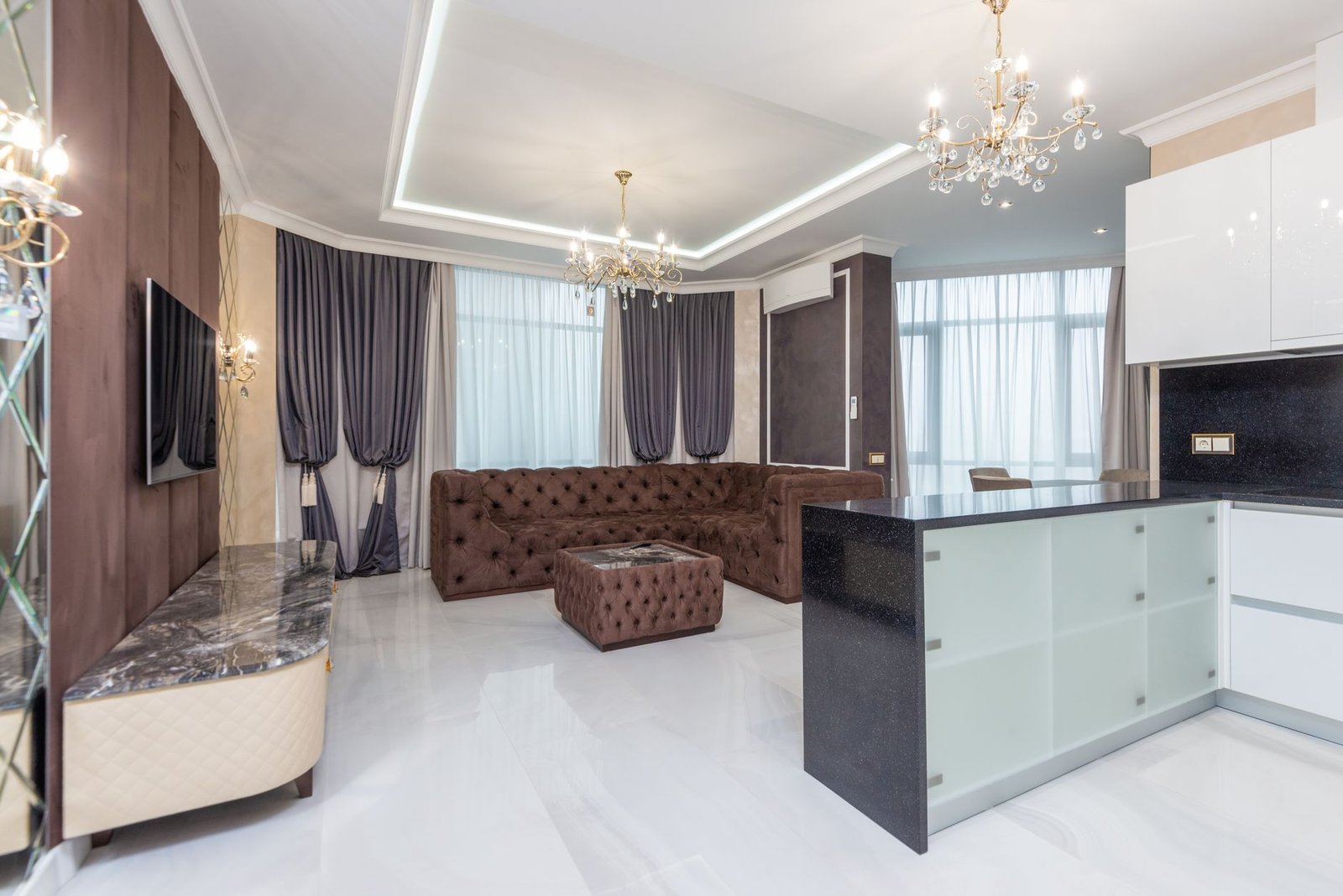
The ceiling is one of the most transformative surfaces in any interior fit-out — and one of the most frequently underestimated. In Dubai’s construction environment, virtually every new build and renovation includes a suspended false ceiling: it hides the slab soffit, conceals AC ducts, electrical conduits and sprinkler pipes, provides a clean paintable surface, and, crucially, gives designers a plane to play with light, depth, and texture.
Across 500+ fit-out and interior design projects in Dubai, Abu Dhabi, and Sharjah, V Square has designed and installed false ceilings in apartments, villas, corporate offices, retail spaces, restaurants, clinics, and hotels. The costs and guidance below come from those live projects in 2025–2026 — not from a catalogue.
False Ceiling Types and Costs in Dubai 2026
There is no single “false ceiling.” The market splits into half a dozen distinct systems, each with different cost profiles, performance characteristics, and design possibilities. Understanding which type fits your space and budget is the starting point of every ceiling design conversation we have with clients.
| Ceiling Type | Cost Range (AED/sqft) | Best For | Lead Time |
|---|---|---|---|
| Flat gypsum board (basic) | AED 35–55 | Apartments, offices, budget residential | 5–8 days/1,500 sqft |
| Cove / tray ceiling with LED channel | AED 60–90 | Living rooms, master bedrooms, lobbies | 8–14 days/1,500 sqft |
| Coffered / panelled ceiling | AED 90–150 | Formal dining, boardrooms, luxury villas | 3–5 weeks |
| Stretch PVC ceiling | AED 80–120 | Bathrooms, wet areas, feature spaces | 2–4 days (post-frame) |
| Wooden slat / timber-look | AED 90–160 | Hospitality, luxury residential, biophilic offices | 2–4 weeks |
| Metal grid / T-bar (commercial) | AED 40–70 | Open-plan offices, retail back-of-house | 4–7 days |
| POP decorative cornices & mouldings | AED 60–110 (add-on) | Classic / traditional interiors | Per linear metre |
All rates above include installation labour, GI steel frame, board/material, jointing compound, sanding to paint-ready standard, and one coat of sealer primer. They exclude lighting fixtures, AC integration works, sprinkler repositioning, and decorative paint finishes — each of which adds to the total cost. See the section on what affects ceiling cost below.
Gypsum Board Ceilings: The UAE Standard
Gypsum board (commonly called drywall in North America, or plasterboard in the UK) has become the default false ceiling material across the UAE for a straightforward reason: it works. The board is dimensionally stable across the temperature and humidity cycling that UAE buildings experience, it accepts any paint or texture finish, and it integrates seamlessly with the concealed AC supply and return air diffusers that every Dubai space requires.
The standard construction method is a GI (galvanised iron) metal stud frame suspended from the slab by threaded rod hangers, onto which 12mm gypsum board is screw-fixed. Joints are taped and filled with jointing compound, sanded smooth, and primed. The result is a flat, paint-ready surface that can be handed over to a decorator.
Moisture-resistant gypsum
For bathrooms, laundries, and any room with direct humidity exposure, standard gypsum board is not sufficient. Moisture-resistant (MR) grade gypsum — the green-paper-faced board — is the minimum specification for UAE wet-area ceilings. In steam-heavy environments such as hammam bathrooms or commercial kitchens, cement board or a stretch PVC system is a better long-term choice.
Cove and Tray Ceiling Design in Dubai
Cove lighting is the most requested false ceiling feature in Dubai residential interior design projects. The principle is simple: a stepped recess is built into the ceiling perimeter or along a central rib; LED strip lighting sits inside the recess and washes the ceiling with warm, diffused indirect light. The effect is layered, sophisticated, and eliminates the harsh glare of exposed downlights.
A well-designed cove ceiling does two things simultaneously: it defines the room’s atmosphere, and it conceals the AC duct runs and wiring that every space requires. In a typical Dubai apartment living room of 450–600 sqft, a perimeter cove with LED strip costs AED 25,000–45,000 inclusive of the gypsum works, LED strip, driver, dimmer wiring, and a DEWA-approved electrical connection.
Tray ceilings are a related form: the centre of the ceiling is raised (or appears raised) relative to the perimeter, creating a “tray” effect. They work well in bedrooms where the bed axis aligns with the ceiling design, giving the room a sense of focus and height.
What Affects the Cost of a False Ceiling in Dubai
Ceiling height and void space
Most Dubai apartments have slab-to-slab heights of 2.9–3.2m. After the GI frame (75mm deep) and 12mm board, the finished ceiling clears at 2.6–2.8m — generous enough for comfort and for concealing standard 200mm-deep AC ductwork. Where developers have used low-cost construction with 2.7m slab-to-slab heights, the available ceiling void is only 400–500mm, which limits design options and requires careful MEP coordination. Tight ceiling voids add cost because every element — frame, AC duct, wiring, sprinkler pipe — must be coordinated before boarding begins.
MEP integration
The mechanical, electrical, and plumbing (MEP) coordination within the ceiling void is typically the largest variable in ceiling cost. Moving AC supply and return air diffusers to align with the new ceiling design costs AED 800–1,800 per diffuser including duct modification and recommissioning. Relocating a sprinkler head requires a Civil Defense-approved contractor and costs AED 400–900 per head. New electrical circuits for lighting and power need a DEWA permit and licensed electrical contractor. Budgeting for MEP before committing to a ceiling design is essential — it frequently represents 30–50% of the total ceiling project cost.
Design complexity
A flat ceiling with no features is the cheapest option. Each additional level of complexity adds cost: a single perimeter cove adds roughly 15–25% over a flat ceiling for the same area; a coffered grid with four coves per coffered bay can triple the cost. Curved ceiling elements require custom steel framing and are priced on a project basis, typically AED 150–300/sqft for the curved sections.
Decorative finishes
The ceiling cost benchmarks above include a paint-ready primer but not the final decorative finish. High-gloss lacquer paint on gypsum ceilings (popular in feature spaces) costs an additional AED 18–30/sqft for the paint and application. Venetian plaster ceiling finishes run AED 30–60/sqft. Metallic spray finishes for hospitality feature ceilings can reach AED 80–150/sqft for the finish alone.
Dubai Municipality Approvals for False Ceiling Works
Permit requirements for false ceiling works in Dubai depend on whether the project is residential or commercial, and whether MEP systems are being modified.
Residential apartments
A like-for-like gypsum board replacement in a residential unit — same configuration, no MEP changes — does not typically require a DM fit-out permit. However, if you are running new electrical circuits, adding a distribution board, modifying AC ductwork, or relocating sprinkler heads, those specific works require separate NOCs: DEWA approval for electrical, DM Civil Defense for fire systems. Most residential ceiling renovation projects involve at least one of these elements, so engaging a licensed fit-out contractor (who handles permit coordination) from the outset avoids fines and rework.
Commercial fit-outs
Office, retail, restaurant, and other commercial fit-outs in Dubai require a full fit-out permit from DM before any works commence. The permit application includes architectural drawings showing the ceiling design, MEP drawings showing AC, electrical, and fire-system layouts, and a signed NOC from the building’s owner or master developer. V Square’s project management service covers the complete permit process as part of our fit-out scope — clients do not need to navigate DM separately.
False Ceiling Design Trends in Dubai 2026
Indirect LED cove lighting
Nothing has changed Dubai interior design more in the past five years than accessible, tunable LED strip lighting. Warm white (2700K) cove lighting defines the luxury residential aesthetic; colour-temperature-adjustable strips (2700K–4000K) are popular in home offices and multi-use rooms where the lighting mood needs to shift. Budget for high-CRI (90+) LED strip at AED 120–280 per metre for quality product that will not colour-shift within two years.
Wooden slat ceilings
Timber-look ceiling panels — in engineered oak, walnut veneer, or high-pressure laminate with wood-grain texture — are the stand-out ceiling trend in Dubai’s luxury residential and hospitality sectors in 2026. They introduce warmth and acoustic softness that gypsum cannot match, and they pair well with the natural-material interiors (stone, linen, rattan) that dominate current design direction. Engineered wood slat ceilings also perform better than solid wood in UAE humidity conditions.
Acoustic ceiling panels
Open-plan offices, co-working spaces, and high-occupancy hospitality venues in Dubai are increasingly specifying acoustic ceiling panels to manage reverberation. Mineral wool tile ceilings in a T-bar grid are the cost-effective solution (AED 45–70/sqft including grid). Perforated gypsum board with rock wool insulation above is a more premium acoustic solution that maintains a seamless plasterboard appearance while delivering meaningful sound absorption.
High-gloss and metallic finishes
Feature reception areas, hotel lobbies, and high-end retail spaces in Dubai increasingly specify metallic spray or lacquer-painted gypsum ceilings — a ceiling that reads as a design element rather than a functional necessity. Stretch PVC ceilings with mirror or satin finishes achieve a similar effect with faster installation and zero cracking risk, which matters in a seismic region where gypsum can develop hairline cracks over time.
How V Square Plans and Manages False Ceiling Projects
A false ceiling is not an isolated fit-out trade — it sits at the intersection of structural, MEP, and finishing works, and its sequencing affects every other trade in the programme. Getting it wrong (boarding before MEP is signed off, for instance) means opening up finished ceilings, which is expensive and avoidable.
V Square’s fit-out project management process for ceiling works follows a structured sequence. First, we finalise the ceiling design in coordination with the MEP engineer, confirming the position of every AC diffuser, sprinkler, light fitting, and access panel before a single metre of frame goes up. Second, all MEP first-fix works — ductwork, wiring, sprinkler pipes — are completed and inspected inside the ceiling void. Third, boarding and jointing proceed on the completed and signed-off MEP frame. Finishing and decoration happen last.
This sequence sounds obvious, but it is frequently ignored on smaller projects where sub-contractors are working concurrently without a project manager coordinating the programme. The result is cracked ceiling joints from MEP tapping through boards, or access panels cut after boarding because someone forgot a valve. On 500+ projects, V Square has learned that ceiling coordination is where programme risk either gets managed or multiplies.
Our flooring and ceiling scopes are typically planned together, since both share prep time and their final-fix sequences need to be coordinated around skirting, shadow gaps, and door frames. Similarly, commercial office fit-out ceiling works are inseparable from the partitioning and MEP first-fix programme.
Get a False Ceiling Quote for Your Dubai Project
V Square designs and installs all ceiling types across apartments, villas, offices, retail, and hospitality spaces in Dubai and the UAE. We manage the full scope — design, permits, MEP coordination, installation, and finishing.
WhatsApp Us for a QuoteFrequently Asked Questions
How much does a false ceiling cost in Dubai in 2026?
A basic flat gypsum board false ceiling in Dubai costs AED 35–55 per sqft installed, including the GI frame, 12mm gypsum board, jointing compound, sanding, and paint-ready finish. Mid-range cove or tray ceilings with indirect LED channels cost AED 60–90/sqft. Decorative coffered or panelled ceilings run AED 90–150/sqft. Stretch PVC ceilings start at AED 80/sqft. Wooden slat or timber-look ceilings are AED 90–160/sqft. A 1,500 sqft apartment ceiling in basic gypsum with two cove lighting channels costs AED 75,000–120,000 all-in including MEP integration.
Do I need a Dubai Municipality permit for a false ceiling?
In Dubai, like-for-like false ceiling works in a residential apartment without MEP changes do not typically require a DM structural permit. However, if works involve modifying AC ductwork, relocating sprinkler heads, moving smoke detectors, or installing new electrical circuits, you need separate MEP NOCs from DM and DEWA. All commercial fit-outs (offices, retail, restaurants) require a full fit-out permit from DM before work begins. A licensed fit-out contractor can handle the permit process on your behalf.
What is the best false ceiling material for Dubai?
Gypsum board is the most widely specified false ceiling material in Dubai because it is stable in UAE temperature-humidity conditions, accepts any finish, integrates cleanly with AC and LED lighting, and is repairable. Moisture-resistant gypsum is required in wet areas. Stretch PVC is ideal for bathrooms and high-humidity feature spaces. Wooden slat ceilings are gaining ground in luxury residential and hospitality projects for their warmth and acoustic qualities.
How long does false ceiling installation take in Dubai?
A basic gypsum board ceiling in a 1,500 sqft apartment takes 5–8 working days for frame and board, plus 3–5 days for jointing, sanding, and primer. Cove lighting channels add 2–3 days for LED strip wiring. Coffered ceilings take 3–5 weeks for the same area. Commercial office ceiling works run 2–4 weeks depending on MEP coordination. MEP first-fix (AC, sprinklers, wiring) must be completed before boarding and is usually the longest-lead activity.
What height should a false ceiling be in a Dubai apartment?
Dubai Municipality guidelines require a minimum clear ceiling height of 2.4m in habitable rooms; 2.5–2.7m is preferred for comfort. Most Dubai apartments have slab-to-slab heights of 2.9–3.2m, leaving 300–600mm of ceiling void for framing, AC ducts, wiring, and board. Tight voids (under 400mm) limit design options and require careful MEP coordination to avoid clashes.
Can I install LED cove lighting in my Dubai apartment false ceiling?
Yes—indirect LED cove lighting is one of the most requested ceiling features in Dubai. The cove is a stepped recess built into the ceiling perimeter; LED strip inside washes the ceiling with diffused light. The LED strip, driver, and wiring must be installed by a DEWA-approved electrical contractor. Budget AED 180–350 per linear metre for a cove light channel including joinery, LED strip, driver, dimmer wiring, and finishing.