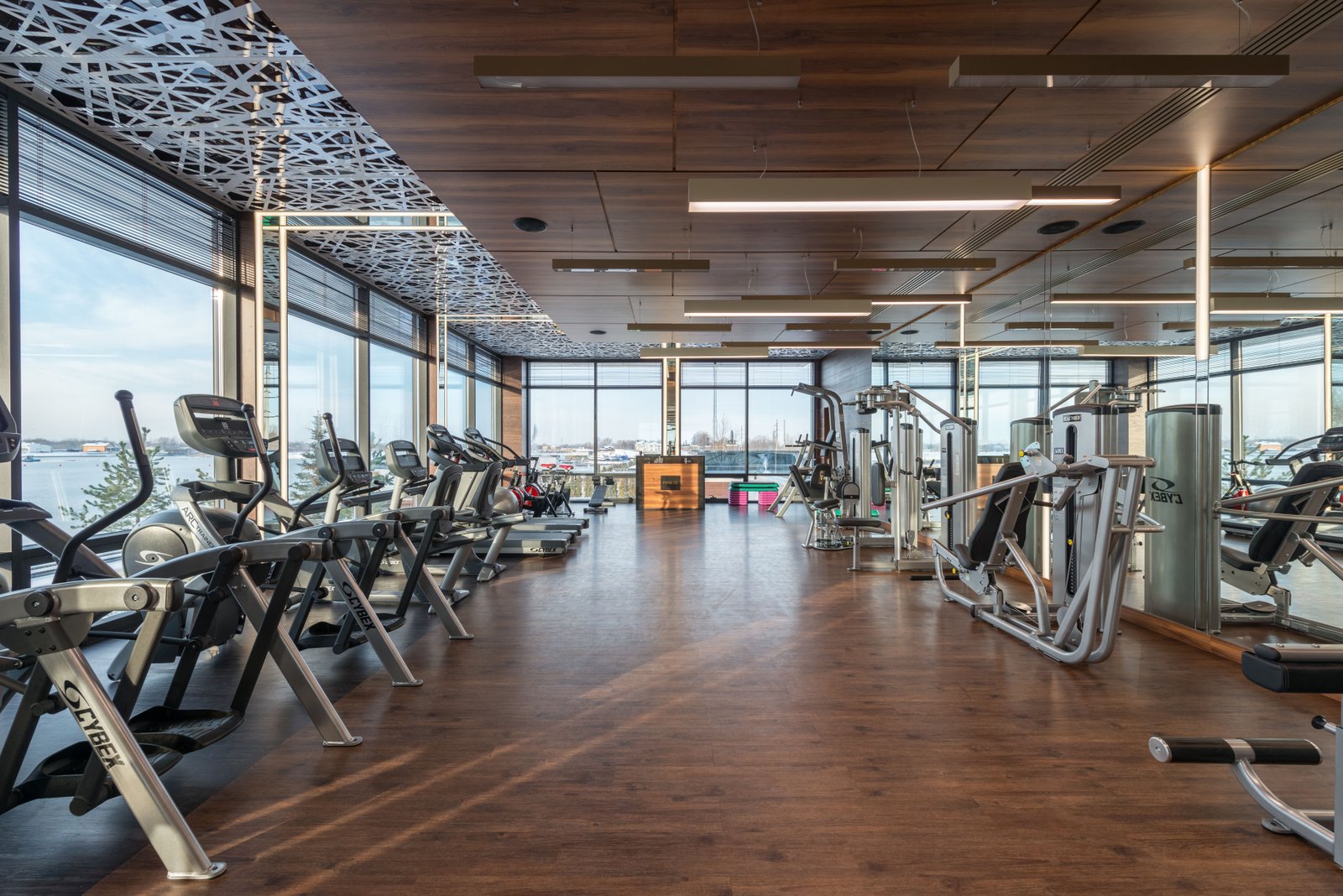
The UAE fitness market has expanded substantially over the past three years. New gym openings across Dubai, Sharjah and Abu Dhabi have accelerated as domestic demand and tourism-driven wellness spend increase — and that growth has attracted a broad range of operators, from large commercial chains to boutique personal training studios and hotel health clubs. What they all share is a common discovery: gym fit-outs are technically more demanding than most commercial interiors, and the specification decisions made at the design stage determine whether the facility performs well for the next ten years or becomes a maintenance burden from the first year.
After delivering fitness and wellness fit-outs across the UAE, the pattern I see most often is owners focusing entirely on equipment selection while underestimating the building infrastructure the equipment needs to perform in. The HVAC, the flooring specification, the structural loading for heavy equipment on upper floors, the electrical supply for commercial-grade cardio machines — these are not afterthoughts. They are the project.
What gym fit-out costs in the UAE in 2026
Gym fit-out pricing in the UAE varies widely because the scope varies widely. A stripped-back personal training studio is a very different project from a multi-zone commercial gym with changing rooms, a juice bar and a group fitness studio. The table below gives realistic all-in ranges for the fit-out scope — design, MEP, flooring, joinery, mirrors, air-conditioning, lighting and installation. Equipment is always separate and covered in its own section below.
| Gym Type | AED per sqft | Example: 2,000 sqft | Key scope drivers |
|---|---|---|---|
| Budget / community gym | AED 250–450 | AED 500K–900K | Standard rubber mat, basic mirrors, split A/C, minimal joinery |
| Mid-range commercial gym | AED 450–750 | AED 900K–1.5M | Zoned rubber flooring, VRF HVAC, changing rooms, reception, design fit-out |
| Premium / boutique studio | AED 750–1,200 | AED 1.5M–2.4M | Bespoke joinery, architectural lighting, premium showers, acoustic treatment |
| Luxury health club | AED 1,200–2,000+ | AED 2.4M–4M+ | Spa, sauna, steam room, premium stone, hospitality-grade F&B, full MEP overhaul |
All figures include 5% VAT and assume a shell-and-core condition with basic MEP in place. If the space is a raw concrete shell, add AED 80–150 per sqft for primary MEP works. If the space requires a Change of Use from a previous occupancy category, budget an additional AED 15,000–50,000 for the DM permitting process before fit-out approvals begin.
The six design zones every gym fit-out must resolve
A gym is not a single space — it is six or more distinct environments sharing a building envelope and an MEP system. Getting the zone layout right at design stage drives both operational performance and construction efficiency. Change it during fit-out and you pay for the disruption twice.
Cardio zone
Treadmills, bikes and rowing machines generate heat, vibration and noise. The cardio zone needs 3-phase electrical supply to serve commercial-grade equipment — a single-phase domestic supply will trip on peak load. Flooring should be 8–10mm commercial rubber or LVT rated for continuous rolling loads. Ceiling height of 3.0m minimum (3.5m preferred) keeps the space from feeling oppressive during extended sessions. AV integration — screens, HDMI drops, ceiling speakers — is much cheaper to specify here than to retrofit into a finished ceiling.
Free weights and functional training
This is the highest-load zone in terms of both floor impact and structural loading. Rubber tiles of 15–20mm vulcanised compound are the minimum specification; 20–25mm is better under Olympic platforms. If this zone is on any floor above ground — a common scenario in mall gyms and multi-level health clubs — a structural engineer's confirmation of slab loading capacity is mandatory before equipment can be specified. A loaded barbell rack can impose point loads that exceed standard commercial slab design. Missing this step creates liability, not just inconvenience.
Group fitness and studio
Spin studios, yoga rooms and HIIT studios each have distinct requirements. Spin generates extreme heat — 15+ ACH HVAC is the benchmark — and requires a sprung or resilient floor to manage the vibration from dozens of flywheel-resistance bikes under simultaneous load. Yoga studios prioritise acoustic calm and surface comfort, typically a cork-rubber composite or hardwood floating floor. HIIT studios need high-abrasion rubber, acoustic wall panels for impact noise, and full-height mirrors for form feedback. All group fitness spaces benefit from dedicated audio systems with zone control rather than shared building-wide audio.
Changing rooms and wet areas
Changing rooms are often the space that determines member perception of a gym's quality. Anti-slip R11-rated porcelain tiles, waterproof tanking systems, commercial-grade ventilation separate from the main gym HVAC, and locker joinery rated for daily humidity exposure are non-negotiable in the UAE climate. The same waterproofing discipline that applies to healthcare wet areas applies equally here. Moisture infiltration into walls and subfloors is the most common cause of premature renovation in UAE gyms. Budget adequately for the tanking membrane — it is invisible and frequently cut to save cost, with predictable consequences within two to three years.
Reception and members area
The reception is the operational hub for access control, billing and guest management. Design considerations: counter height and depth for the technology stack (POS, access control panel, monitors), durable surface materials that project brand quality while resisting constant contact wear, and a clear sightline to the gym floor for duty staff. Premium gyms increasingly incorporate a supplement or juice bar adjacent to reception — this requires a small Food Authority registration and a commercial extraction system for blending equipment.
Support areas
Equipment storage, a dedicated maintenance area, a plant room for HVAC units, and staff facilities are all required by Dubai Sports Council classification standards and DM fit-out guidelines. Undersizing the plant room — a common cost-saving impulse — creates serious problems when HVAC units need servicing, which in a UAE gym environment they will, frequently. A properly sized plant room with clear maintenance access is a meaningful operational asset, not a luxury.
Dubai Sports Council, DM and Civil Defence — the three approval tracks
Running a gym in Dubai requires simultaneous engagement with three separate authorities. The critical mistake operators make is treating these as sequential — first fit out, then apply for approvals. The approvals must run in parallel with design to avoid a completed facility that cannot open because a licence application is still outstanding.
Dubai Sports Council (DSC) licence
The DSC licence governs the operation of the gym, not just the building. Requirements include: minimum trainer-to-floor-area ratios, certified first-aid provision, safety signage in Arabic and English, and equipment meeting DSC-approved standards. The DSC application requires a floor plan, a list of services to be offered, and proof of qualified staff. Submit the DSC application concurrently with the DM fit-out submission — the two processes run in parallel, and DSC pre-approval of your floor plan can inform and speed the DM submission.
Dubai Municipality BPS portal approval
All fit-out submissions in Dubai go through the Building Permit System (BPS) portal, which runs an automated AI compliance scan before a human reviewer sees the package. Your submission must include: architectural layout drawings with dimensions and zone labels, MEP drawings (HVAC, electrical load schedule, plumbing), hygiene and sanitation layout for changing rooms, and Al Sa'fat 2.0 sustainability documentation. If the space was previously used for another purpose — retail, storage, office — a Change of Use application must be approved before fit-out drawings can be submitted. Submitting fit-out drawings while a Change of Use is pending results in automatic BPS rejection.
Civil Defence clearance
Civil Defence approvals cover fire safety systems, emergency lighting, sprinkler coverage across all zones, and material compliance for wall and ceiling finishes. Gyms with rubber flooring can face queries from Civil Defence inspectors about whether the specified rubber compound meets UAE fire-resistance requirements — ensure your flooring supplier provides a product certificate confirming compliance with UAE.S 172 or equivalent international fire-classification standards before specifying. Changing rooms with floor-to-ceiling lockers may also require Civil Defence-approved locker materials if the lockers are treated as partition elements.
HVAC — the specification that makes or breaks a UAE gym
No element of a gym fit-out is more consequential than the HVAC system, and none is more consistently underspecified. A gym generates three to four times the heat load of a standard commercial office per square metre, driven by body heat from exercising members, motor heat from commercial equipment, and — in coastal locations — humidity infiltration that standard air-conditioning cannot address.
The benchmark specifications for UAE gyms in 2026:
- General gym floor: 8–12 air changes per hour (ACH) with dedicated fresh-air intake, not just recirculation
- Spin / cycle studio: 12–16 ACH — a 60-minute spin class with 20 riders in a 400 sqft room generates heat loads comparable to a commercial kitchen
- Yoga / Pilates studio: 6–10 ACH with specific humidity control requirements for member comfort
- Changing rooms: Dedicated negative-pressure extract separate from the gym HVAC, preventing moisture-laden air from migrating into the training floor
- Dehumidification: A standalone dehumidification system — or VRF units with dehumidification capability — is strongly recommended in any UAE gym, particularly May through October when ambient humidity regularly exceeds 80%
VRF (Variable Refrigerant Flow) systems are the preferred technology for larger gyms above 2,000 sqft — they allow zone-by-zone temperature control, recover heat from high-load areas to offset loads in lower-activity zones, and are more energy-efficient at partial load than chilled-water systems of equivalent capacity. End-to-end project management that coordinates the HVAC design with the structural and electrical engineers from the first design meeting — rather than adding HVAC as an afterthought — consistently delivers better-performing systems at lower total cost.
Flooring — the decision every gym owner leaves too late
Gym owners typically think about flooring in terms of cost and aesthetics. The performance specification is more complex, and the wrong choice creates either a safety issue, a maintenance problem, or both.
- Free weights zone: 15–20mm vulcanised rubber tiles, minimum Shore A hardness of 60 for Olympic platforms. Interlocking tiles allow future zone reconfiguration; bonded rolls are faster to install but permanent.
- Cardio zone: 8–10mm commercial rubber or LVT with a textured surface finish. LVT is easier to maintain and aesthetically cleaner for premium facilities, but requires a perfectly flat subfloor to avoid long-term joint failure.
- Group fitness: Floating timber (engineered hardwood over a resilient pad) or cork-rubber composite for shock absorption. Both materials require expansion gaps at perimeters — a detail frequently missed by non-specialist contractors.
- Changing rooms and wet areas: Anti-slip porcelain, minimum R11 classification, properly grouted over a waterproof membrane. Never specify polished or honed porcelain in wet areas — it fails Civil Defence inspection.
A specialist interior design team will coordinate flooring specification with the structural engineer's loading data, the Civil Defence fire classification, and the HVAC engineer's underfloor plenum requirements where air distribution is below the slab. These interactions are invisible on a plan, but they determine whether the specified materials can actually be installed as designed.
Equipment — a separate budget line that must be planned from day one
Gym equipment is not part of the fit-out contract and is never included in fit-out pricing. It is a distinct procurement track with its own lead times, delivery logistics and installation requirements. For a mid-range 2,000 sqft commercial gym, equipment typically costs:
- Entry-level commercial brands (Impulse, Precor entry): AED 300,000–550,000
- Mid-range commercial (Life Fitness, Matrix, Cybex): AED 550,000–950,000
- Premium commercial (Technogym, Hammer Strength): AED 950,000–1,800,000+
Premium equipment brands sourced from international distributors carry lead times of 8–14 weeks. If the order is not placed during the design phase, the gym will complete construction and then sit empty waiting for machines. The same parallel procurement discipline applies to hotel FF&E: the design and procurement tracks must run concurrently, not in sequence.
Timeline from design start to opening day
A realistic gym fit-out timeline has four overlapping phases. Treating them as sequential adds 8–12 weeks to the programme unnecessarily.
- Design (weeks 1–8): Concept design, zone layout, material palette, equipment coordination drawings, MEP design brief, authority-submission package. Equipment specification must be finalised here to allow concurrent procurement.
- Approvals (weeks 5–14, overlapping with design): DM BPS portal submission, DSC pre-licence application, Civil Defence fire strategy review. Allow 4–8 weeks for a straightforward submission; 8–12 weeks if Change of Use is involved.
- Fit-out execution (weeks 10–24): Shell preparation, MEP first fix, flooring, partitions, ceiling systems, joinery, lighting, finishes, mirrors. A 1,000 sqft studio runs 6–8 weeks; a 4,000 sqft multi-zone gym with wet areas runs 12–16 weeks.
- Equipment, snagging and opening (weeks 20–30): Equipment delivery and installation; snagging and defect resolution; DSC and Civil Defence final inspection; soft-launch operations testing.
Total from design start to operational opening: 16–22 weeks for a studio, 24–30 weeks for a full commercial gym. Projects that compress the approval phase by starting fit-out before DM approval is received routinely face stop-work orders that cost more in delay than the time saved.
Frequently asked questions
How much does a gym fit-out cost in the UAE in 2026?
AED 250–450 per sqft for a budget community gym, AED 450–750 for a mid-range commercial fitness centre, and AED 750–1,500+ for a premium boutique studio. A 2,000 sqft commercial gym costs approximately AED 900,000–2M all-in for the fit-out scope. Equipment is a separate line: AED 300,000–1,800,000+ depending on brand tier.
What approvals are required to open a gym in Dubai in 2026?
Three approvals are mandatory: Dubai Sports Council (DSC) fitness facility licence; Dubai Municipality fit-out approval via the BPS portal (including Change of Use permit if the space was not previously a gym); and Dubai Civil Defence fire safety clearance. All three should be pursued in parallel with design, not after fit-out completion.
What is the best flooring for a gym in the UAE?
Zone-specific: 15–20mm vulcanised rubber for free weights; 8–10mm commercial rubber or LVT for cardio; floating timber or cork-rubber composite for group fitness studios; R11-rated anti-slip porcelain for changing rooms and wet areas. Never use polished surfaces in training or wet zones.
What HVAC specification does a UAE gym need?
8–12 air changes per hour (ACH) for the general gym floor; 12–16 ACH for spin and high-intensity studios; dedicated negative-pressure extract for changing rooms. Dehumidification is strongly recommended across all zones. VRF systems are preferred for gyms above 2,000 sqft.
How long does a gym fit-out take from start to opening?
16–22 weeks for a personal training studio or small gym; 24–30 weeks for a full commercial gym with changing rooms, group fitness studios and wet areas. Design, approvals, fit-out and equipment procurement must run as overlapping parallel tracks.
Is gym equipment included in the fit-out quote?
No — equipment is always a separate procurement contract. Premium commercial brands have 8–14 week lead times and must be ordered during the design phase. Equipment ordered post-handover routinely delays gym openings by 8–12 weeks.
Planning a gym or fitness centre fit-out in the UAE?
V Square manages commercial fit-outs across the UAE — from initial design and authority approvals through to contractor management and handover. We coordinate the HVAC, flooring, MEP and equipment tracks as a single managed programme so your gym opens on time.
Request a project consultation