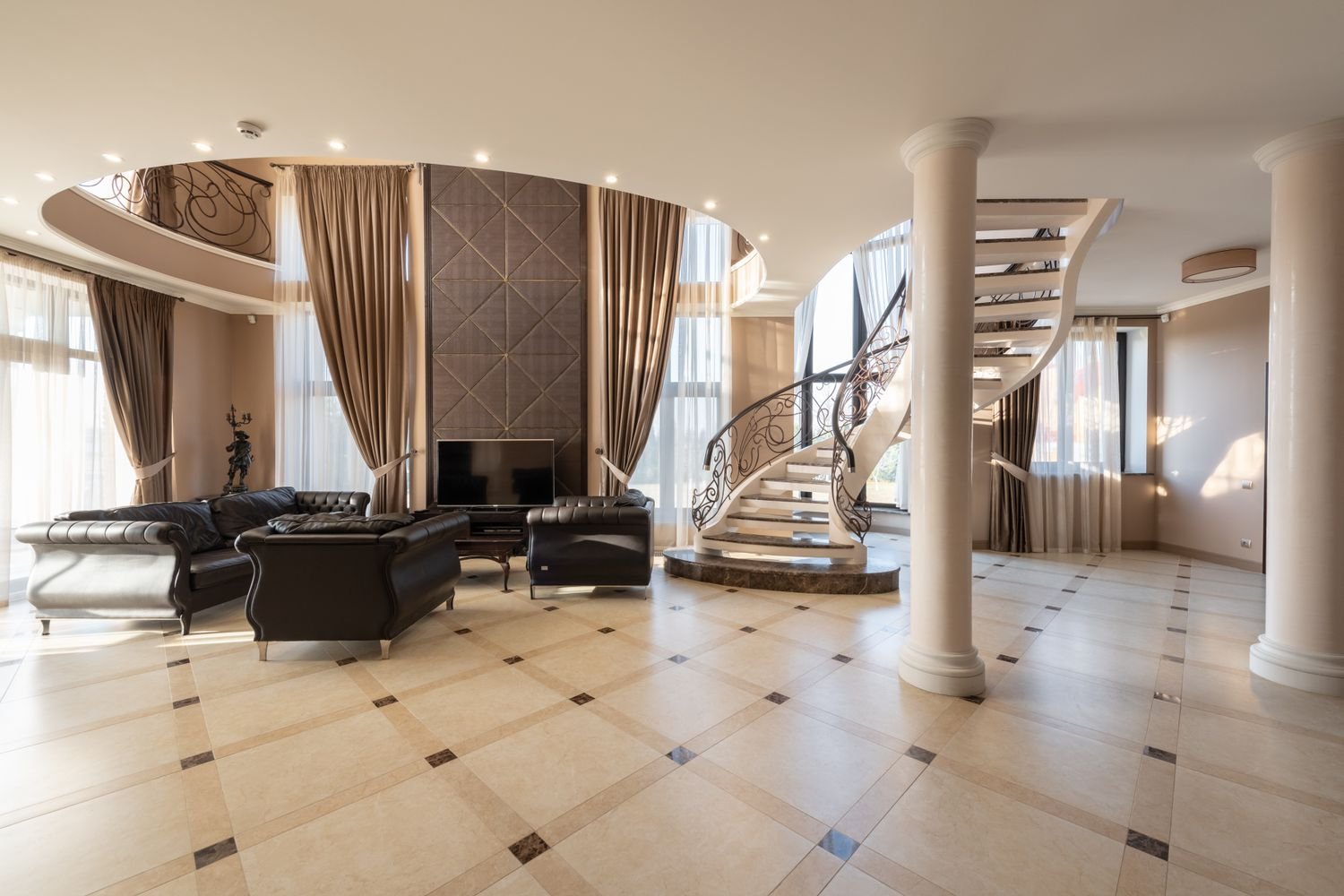
Nobody plans a house around the staircase, and yet it's often the first thing a visitor actually notices when they walk through the front door. On the villa and duplex apartment projects we run across Dubai Hills, Al Barari and Arabian Ranches, the staircase gets far less design attention up front than the kitchen or the master bedroom—then becomes the thing clients most regret not upgrading once they see the finished result next to it. This guide covers what a proper staircase design or renovation actually costs, and the material and layout decisions that matter most.
What Does Staircase Design and Renovation Cost in Dubai in 2026?
Most Dubai villas already have a structural staircase in place from handover, so the real question for most clients isn't building one from scratch but re-cladding and redesigning an existing one. Here's the breakdown by scope:
| Scope | Cost (AED) | Typical Work | Timeline |
|---|---|---|---|
| Cosmetic re-clad | 25,000–55,000 | New porcelain or engineered timber treads over existing structure, refreshed balustrade | 2–3 weeks |
| Full marble upgrade | 55,000–110,000 | Marble or engineered stone treads and risers, wrought iron or glass balustrade, new handrail | 3–5 weeks |
| Bespoke floating / curved | 110,000–180,000+ | Structural steel stringer, cantilevered or curved treads, glass or cable balustrade | 6–10 weeks |
The biggest single cost driver isn't the tread material—it's whether you're re-cladding an existing structure or changing its shape. Keeping the same footprint and just upgrading finishes is a relatively contained job. Reshaping a dog-leg staircase into a curved or floating design means new structural steelwork, which is where budgets jump from the tens of thousands into six figures. For a full renovation that includes the staircase alongside the rest of the home, our villa interior design cost guide covers how staircase work fits within a wider room-by-room budget.
Staircase Types for Dubai Villas and Duplexes
Straight and Dog-Leg (Most Common)
The majority of Dubai villas, particularly in communities built over the last 10-15 years, use a straight-run or dog-leg (two flights with a landing) staircase. These are the most cost-effective to re-clad because the existing concrete structure rarely needs modification—you're changing surface materials and the balustrade, not the shape.
Curved and Spiral
Curved staircases with a sweeping radius are the signature feature in higher-end villa entrance halls, particularly in Emirates Hills and Al Barari where double-height foyers give the design room to breathe. A true curved staircase almost always requires new structural work rather than a re-clad, since the underlying shape has to change, not just the surface. Spiral staircases are less common in main entrances but show up regularly as secondary or service staircases where floor space is tight.
Floating (Cantilevered)
Floating staircases, where treads appear to cantilever from a wall with no visible support structure, are the strongest 2026 trend request we're getting from clients renovating double-height living spaces. They require a concealed steel stringer bolted into the wall structure and read as significantly more expensive than they actually are once the structural work is done—the visual impact outweighs the incremental cost over a full marble staircase with a conventional stringer.
Materials: Marble, Timber, Glass and Metalwork
Marble and engineered stone dominate villa staircase specifications in Dubai, and for good reason—they don't move with humidity, handle heavy foot traffic without wearing, and match the marble or large-format porcelain flooring already common in villa entrance halls. Statuario and Calacatta-look porcelain (a more affordable, more consistent alternative to natural marble) has become the default mid-range choice, with book-matched natural marble reserved for higher-end projects where the veining pattern itself is the design statement.
Engineered timber treads give a warmer look and are popular for staircases connecting to timber flooring upstairs, but solid hardwood is something we actively steer clients away from. Dubai's AC cycles create enough humidity swing between rooms and seasons that solid wood treads can open gaps at the joints within a few years—the same underlying issue that affects solid timber wardrobe joinery in this climate. Engineered timber with a stable plywood or MDF core handles the swing far better.
For balustrades, wrought iron with a powder-coated or hand-finished bronze look remains the most requested option for traditional and transitional interiors, while frameless glass panels with a stainless steel or brushed brass handrail dominate the contemporary and minimalist briefs. Cable balustrade systems—thin horizontal steel cables instead of glass or iron infill—are a newer request, mostly on floating staircase projects where clients want the lightest possible visual weight.
Dubai Municipality Code and Safety Notes
Dubai Municipality building regulations set a maximum riser height of 180mm and a minimum going (tread depth) of 250mm for residential staircases—get these wrong on a redesign and the staircase will feel awkward to climb even if it looks right on paper. Handrails are required on at least one side at 900mm height for straight flights, rising to requirements on both sides for wider staircases or those serving multiple households in a building.
The distinction that matters most for budgeting: a cosmetic re-clad that keeps the existing structural shape and dimensions generally doesn't require a new permit, since you're not altering the building's approved structural drawings. Reshaping a staircase—converting dog-leg to curved, for instance, or extending it to a new floor—does require a permit and structural engineer sign-off before any demolition starts. We handle this coordination as part of any structural staircase project, but it's worth knowing upfront that it adds 2-4 weeks to the timeline before physical work can even begin.
Staircase Design Trends in Dubai for 2026
Floating and cantilevered staircases lead the trend list this year, as mentioned above, but the material palette shift is just as notable. Warm-toned marble and engineered stone in beige and taupe tones have largely replaced the stark white Calacatta look that dominated Dubai villa staircases through the early 2020s—the same warm-minimalist shift we're seeing across interior design styles more broadly this year.
Integrated LED strip lighting along the stringer or beneath the handrail, rather than overhead downlights alone, is now a near-standard request on staircase renovation briefs. It's a relatively low-cost addition at the design stage—usually AED 3,000-8,000 depending on run length—and makes a genuinely noticeable difference to how the staircase reads at night, particularly on open, double-height staircases where it becomes a visible architectural feature rather than a purely functional element.
Under-stair storage and feature walls are also getting more attention than they used to. A staircase with unused void space underneath is increasingly treated as wasted square footage rather than an awkward leftover, with clients requesting built-in storage, a small home office nook, or a feature wall with stone cladding or timber slats to dress up what used to be a dead corner.
V Square's Staircase Design and Build Process
Staircase work sits at the intersection of structural engineering and finishing trades, which is exactly where projects go wrong if it's not managed as one coordinated scope rather than handed to separate contractors who don't talk to each other.
- Structural assessment: We inspect the existing staircase to determine whether the project is a re-clad (existing structure retained) or a reshape (new structural work required). This determines both cost and permit requirements from day one.
- Design and material selection: Tread material, balustrade type, handrail finish and lighting are specified together as one design, not selected piecemeal, so the finished result reads as a coherent piece rather than a collection of separate decisions.
- Permits (if required): For any structural reshaping, we submit for Dubai Municipality approval and structural engineer sign-off before demolition begins.
- Construction and installation: Structural work (if any) happens first, followed by cladding, balustrade installation and lighting. The staircase is typically the last major structural element completed before final finishing trades move through the space.
- Snagging: Every tread is checked for level, every balustrade fixing is tested for stability, and lighting is confirmed working before handover. A staircase gets more daily wear and impact than almost any other element in the home, so we're deliberately conservative about what passes snagging here.
For staircase work within a larger renovation, this process runs alongside the broader project timeline described in our home renovation project management guide.
Planning a staircase redesign or renovation in Dubai?
V Square handles the full process: structural assessment, design, permits where needed, and professional installation. Tell us about your current staircase and the look you want—we'll give you a realistic cost range and timeline.
Request a free consultationFrequently Asked Questions
How much does a staircase renovation cost in Dubai?
A straight or dog-leg staircase re-clad in porcelain or engineered timber over an existing structure costs AED 25,000-55,000 for a standard 3-4 bedroom villa. A full marble staircase with a wrought iron or glass balustrade runs AED 55,000-110,000. A bespoke floating or curved staircase, especially one requiring structural steel work, can reach AED 110,000-180,000 or more.
What is the best material for a staircase in Dubai?
Marble and engineered stone are the most popular tread materials for Dubai villa staircases because they don't move with humidity and handle heavy foot traffic well. Engineered timber is a common alternative for a warmer look, but it needs a stable substrate and proper acclimatisation before installation. Solid hardwood is generally avoided because Dubai's air conditioning cycles cause enough humidity swing to open gaps between treads over a few years.
What are the Dubai Municipality requirements for staircases?
Dubai Municipality building regulations generally require a maximum riser height of 180mm and a minimum going (tread depth) of 250mm for residential staircases, with handrails required on at least one side at 900mm height for straight flights. Any structural change to a staircase, as opposed to a cosmetic re-clad, requires a permit and structural sign-off before work begins.
Can I change my staircase without structural work?
In most cases yes, if the existing concrete or steel structure is sound. Re-cladding treads and risers, replacing a timber balustrade with glass or wrought iron, and updating the handrail can usually be done without touching the underlying structure, which keeps both cost and permit complexity down considerably compared to reshaping the staircase itself.