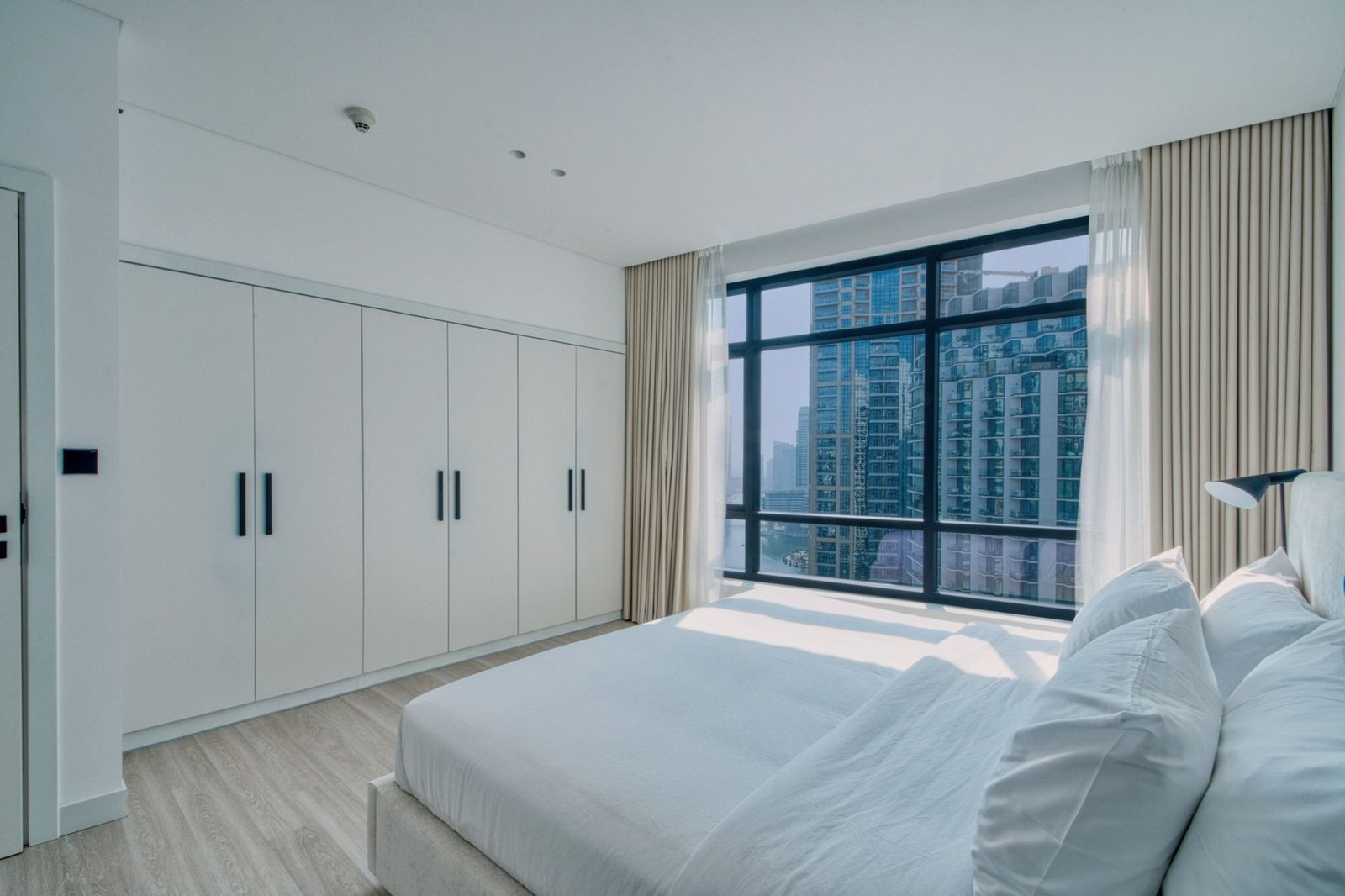
Dubai has more than 30,000 DTCM-licensed holiday homes, and the number grows every year as property investors discover that a well-positioned short-term rental consistently outperforms a long-term lease in the city's most desirable districts. What separates the properties earning AED 900 per night from those earning AED 450 is almost entirely design: the photography, the style, the furnishing quality, and the small details that make a guest leave a five-star review.
This guide covers everything specific to holiday home interior design Dubai — what DTCM actually requires, what it costs, which styles perform best on Airbnb and Booking.com listings, and how to think about durability when your apartment will have a new set of guests every few days.
DTCM Compliance Requirements That Affect Holiday Home Interior Design in Dubai
Before you design anything, understand what Dubai's Department of Economy and Tourism (DET, formerly DTCM) actually inspects. The permit costs around AED 1,520 per unit per year for individual owners, and the property must pass a furnishing inspection before the licence is granted. An inspector will check:
- Beds: Every bedroom must have a proper bed frame and mattress. Sofa beds are permitted as supplementary sleeping, not as the primary sleeping surface in a designated bedroom.
- Kitchen equipment: Cooker or hob, microwave, refrigerator, kettle, toaster, basic cookware, crockery and cutlery for the maximum stated occupancy.
- Dining: A dining table and chairs adequate for the stated number of guests.
- Linens and towels: Hotel-quality bed linen and bath towels (one set per guest plus one spare set per bed, minimum).
- Safety: Smoke detectors, fire extinguisher, first aid kit, and emergency contact card visible near the entrance.
WiFi, a flat-screen TV, blackout curtains, and a full-length mirror are not explicitly listed in the DET standards but appear in virtually every guest review. Omitting them does not fail a DTCM inspection, but it reliably produces lower ratings and lower occupancy. Treat them as mandatory for commercial reasons.
Holiday Home Interior Design Dubai: 2026 Cost Breakdown
The figures below are all-in costs for a typical apartment with standard finishes already in place (developer handover quality floors, walls and kitchen joinery). They include furniture, soft furnishings, artwork, appliances, kitchen equipment, linens, accessories and professional staging — everything needed to photograph and list the property on the same day work completes.
| Unit Size | Budget Range (AED) | What This Buys |
|---|---|---|
| Studio / 500 sqft | AED 15,000 – 30,000 | Mid-range furniture, essential appliances, standard accessories |
| 1-Bedroom / 700–900 sqft | AED 25,000 – 50,000 | Coherent style scheme, quality bed, full kitchen, artwork |
| 2-Bedroom / 1,100–1,400 sqft | AED 40,000 – 80,000 | Matching style across rooms, statement pieces, full linen pack |
| 3-Bedroom / 1,600–2,200 sqft | AED 65,000 – 130,000 | Layered design, feature furniture, premium artwork, accessories |
| Luxury Penthouse / Villa | AED 150,000+ | Bespoke pieces, custom joinery additions, premium brands |
The biggest variable is not unit size but specification level. A 1-bedroom with a mid-range approach costs AED 25,000–30,000. The same unit with Italian upholstered pieces, a handwoven rug, and a bespoke headboard installation costs AED 60,000–80,000. Both pass DTCM inspection. The premium unit earns significantly more per night. For investors comparing options, our fit-out cost guide for UAE 2026 provides a useful benchmark for commercial grade finishes.
Cost breakdown by category
For a typical 2-bedroom at the AED 50,000–60,000 mid-tier:
- Living and dining furniture: AED 12,000–18,000
- Bedroom furniture and mattresses: AED 10,000–15,000
- Kitchen appliances and equipment: AED 4,000–6,000
- Soft furnishings (rugs, curtains, cushions): AED 6,000–10,000
- Artwork and accessories: AED 3,000–6,000
- Linens and towels (full hotel pack): AED 2,500–4,000
- Lighting upgrades and smart devices: AED 2,000–4,000
- Photography and listing setup: AED 1,500–3,000
Design and project management fees, if you engage a professional firm for holiday home interior design in Dubai, typically add 10–18% to the total furnishing budget. This is usually worth it: a coordinated scheme photographs better, wears better, and gives guests a more cohesive experience than self-sourced pieces assembled without a plan.
Choosing a Style for Your Dubai Holiday Home
Style choice is partly personal, but for a holiday home it should primarily be driven by your target guest profile and the location of the property. Three styles consistently perform well on Airbnb and Booking.com in Dubai:
Modern Coastal
Light neutrals, natural textures (rattan, jute, linen), ocean-toned accents in blues and greens, and plenty of natural light. This style photographs extremely well in Dubai's bright ambient light and appeals to the city's large leisure tourist segment. It works particularly well in beachfront buildings at JBR, Palm Jumeirah, and Dubai Harbour.
Contemporary Arabic / Desert Chic
Warm sandy tones, geometric patterns, brass and copper metalwork, and layered textiles with subtle Arabic motifs. This style resonates with GCC visitors (a significant segment of Dubai's leisure market), photographs richly, and differentiates a property from the generic global Airbnb aesthetic. It suits the older residential buildings in DIFC, Downtown and Bur Dubai well.
Minimalist Modern
Neutral palette with one or two strong accent colours, clean lines, quality over volume, and carefully chosen statement pieces. This style is lowest-maintenance for a rental property because there are fewer accessories to damage or lose. It photographs cleanly and appeals to business travellers — a large segment in Marina and DIFC locations.
Whatever style you choose, a subtle theme applied consistently across the property — from the bedroom headboard to the bathroom accessories — makes listing photos more distinctive and memorable to browsing guests. Properties with a recognisable aesthetic are easier to market and easier to maintain brand consistency across listing platforms.
Furniture and Finishes: Durability vs Luxury
The single biggest mistake in holiday home interior design Dubai is treating the property as if it were an owner-occupied residence. Personal furniture choices optimise for how something looks and feels on day one. Rental furniture choices need to optimise for how it looks and functions on day 500, after hundreds of guests and dozens of cleaning cycles.
Upholstery
Avoid cream or white sofas entirely — they stain irreversibly within months. Choose performance fabrics: solution-dyed acrylic, microfibre, or commercial-grade velvet. These clean with a damp cloth, resist most common stains, and hold their colour. They cost more than standard fabric options but are significantly cheaper than replacing a sofa every 18 months.
Bed frames and mattresses
Divan bases with drawer storage are practical but collapse at the centre support rail under frequent adult use. Solid timber or steel frame beds with a central leg are more durable. Mattresses should be medium-firm (the most universally acceptable comfort level for varied guest types) and covered with a quality mattress protector that is washed at every turnover.
Dining tables and coffee tables
Solid wood, stone or tempered glass surfaces are the practical choices. Lacquered MDF tables look identical to solid wood for the first year, then edge-chip and scratch visibly. Stone and glass clean to a photographic finish every time and are almost impossible to scratch in normal use.
Flooring and rugs
Developer handover flooring is usually adequate for most holiday home specifications — tile or engineered wood is durable enough. Area rugs are the element most likely to show wear: choose rugs with a flat weave or low pile that can be steam-cleaned, and have a spare rug for each living area stored on-site for quick replacement when needed. The full flooring guide for Dubai 2026 covers upgrading options if the developer finish is below your target specification.
Design for Photography and Listing Performance
Guests book holiday homes from photographs. The design decisions that matter most for photography are not necessarily the most expensive ones — they are the ones that create visual interest, depth and a sense of space in a static image.
The elements that most reliably improve listing photography are:
- A well-dressed bed: high-quality white bedding, contrast cushions and a throw, and a bedside lamp that glows warmly in the photo. This is usually the hero shot on Airbnb listings.
- Natural light: schedule photography at the time of day when the property gets direct sunlight. In most Dubai apartments this is morning for east-facing units and afternoon for west-facing ones.
- Statement art: one or two large-format prints or canvases that give the living room and bedroom visual anchors without being divisive.
- Layered lighting: interior lighting layers with warm ambient and accent lighting switched on during photography create depth and warmth that a single ceiling fixture cannot achieve.
- Table styling: a curated set of books, a plant, a candle and a decorative tray on the coffee table signals thoughtfulness and care that guests associate with quality hosting.
Professional property photography costs AED 1,500–3,000 in Dubai and pays back within the first booking cycle for most well-designed properties. Amateur phone photography, even with good composition, cannot match the dynamic range and perspective correction that a professional with a wide-angle lens and HDR processing delivers.
How Holiday Home Interior Design Dubai Affects Nightly Rate and ROI
The return-on-investment case for quality holiday home interior design Dubai is straightforward. Consider a 2-bedroom apartment in Dubai Marina:
Plainly furnished: AED 450 average nightly rate × 200 nights annual occupancy (55%) = AED 90,000 gross annual revenue.
Professionally designed: AED 700 average nightly rate × 240 nights annual occupancy (66%) = AED 168,000 gross annual revenue.
The design investment of AED 60,000 produces an additional AED 78,000 in gross revenue in year one, a return of 130% on the design spend in twelve months. In year two and beyond, the incremental revenue continues without the upfront cost, and the property retains its rating advantage as long as the design is maintained.
The fit-out project management guide for UAE 2026 covers the timeline and stages from concept through to handover, which is the same process applied to a holiday home fit-out. For most 1–2 bedroom units, the full process from brief to photography-ready takes four to six weeks.
For the bedroom-specific design choices that affect guest reviews most directly, the bedroom interior design guide for Dubai covers mattress grades, headboard options, and the lighting configurations that photograph best. For the kitchen, the kitchen renovation cost guide is relevant if the developer handover kitchen needs upgrading before listing.
Frequently Asked Questions
How much does holiday home interior design in Dubai cost in 2026?
Holiday home interior design in Dubai costs AED 25,000–50,000 for a furnished 1-bedroom apartment at mid-range specification, AED 40,000–80,000 for a 2-bedroom, and AED 65,000–130,000 for a 3-bedroom. These figures include all furniture, appliances, soft furnishings, artwork, and accessories needed for DTCM inspection and listing photography. Luxury and custom specifications run 50–100% higher.
What DTCM requirements affect holiday home interior design in Dubai?
Dubai's DET (DTCM) requires proper bed frames and mattresses in all bedrooms, a full kitchen equipment set, adequate dining furniture, hotel-quality linens, smoke detectors, a fire extinguisher, and a first aid kit. Properties are inspected before the AED 1,520/year permit is granted. WiFi, blackout curtains, and a television are commercially mandatory even if not explicitly on the inspection checklist.
Does good interior design really increase Airbnb nightly rates in Dubai?
Yes, substantially. Well-styled holiday homes in Dubai typically earn 30–50% higher nightly rates and 10–15 percentage points more occupancy than plainly furnished equivalents in the same building. The primary lever is listing photography: guests book from photos, so a property that photographs well commands higher rates and fills faster. Guest reviews then sustain the advantage by improving search ranking on Airbnb and Booking.com.
What furniture is best for Dubai short-term rental properties?
Choose commercial-grade upholstery fabrics (performance velvet, microfibre, solution-dyed acrylic) rather than standard residential grades. Solid timber or steel bed frames are more durable than divan bases. Avoid white or cream sofas. Use stone, tempered glass or sealed hardwood for tabletop surfaces. Modular furniture is practical because damaged pieces can be replaced individually. Budget for a spare set of rugs and cushion covers stored on-site for fast replacement.
Do I need a DTCM permit before fitting out a holiday home in Dubai?
You can design and furnish the apartment before applying for the DTCM permit, but you cannot legally rent it short-term without the permit. The DET inspection checks that the property is fully furnished and equipped. Most owners complete the fit-out, then apply for the permit inspection immediately — the inspection is typically arranged within 5–10 working days of application. Working with a management company means they usually handle the permit as part of their standard setup process.
Ready to Design Your Dubai Holiday Home?
V Square Project Management Services handles end-to-end holiday home interior design in Dubai — from concept to DTCM-inspection-ready handover. We manage furniture procurement, contractor coordination and photography-ready staging so you can list faster.
WhatsApp Us for a Free Quote