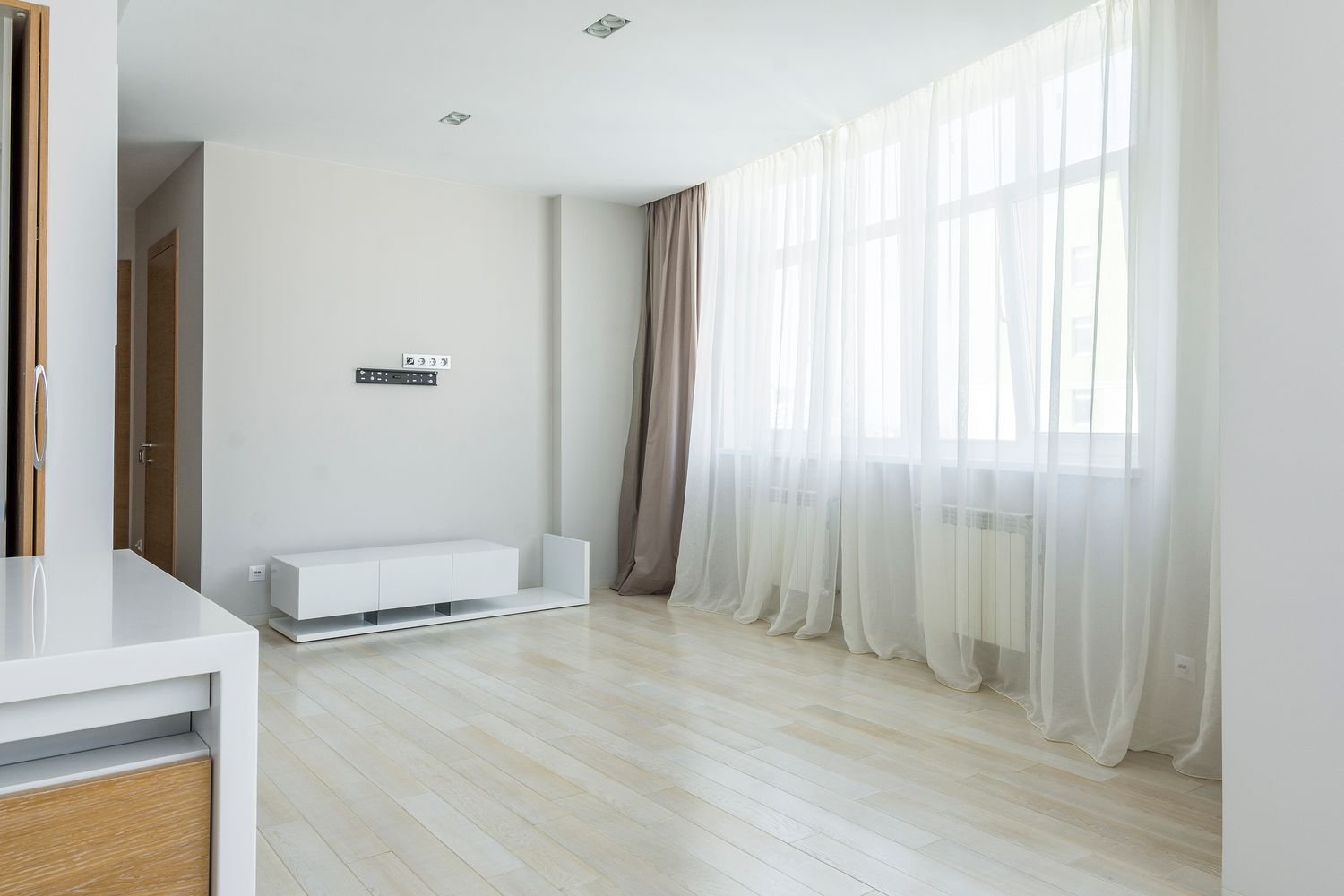
Curtains get treated as an afterthought on a lot of Dubai fit-out budgets, usually squeezed in at the end once flooring, joinery and lighting have eaten most of the number the client had in mind. That's a mistake in this climate specifically. A window wall in a JBR tower or a Damac Hills villa isn't just letting light in—it's the single biggest source of heat gain and glare in the room, and the fabric hanging in front of it does real work managing both. I've sat through enough post-handover complaints about a bedroom that "doesn't get dark enough" or a living room that fades a sofa within a year to know this is worth getting right the first time.
What Do Curtains and Window Treatments Cost in Dubai in 2026?
Pricing is quoted per running metre of track (the width of the window, not the fabric used, since curtains are typically gathered 2-2.5x fullness). Here's how the tiers break down for a standard Dubai apartment or villa window:
| Tier | Cost / Running Metre (AED) | Track Type | Typical Spec |
|---|---|---|---|
| Basic sheer / light-filtering | 80–150 | Manual track or rod | Polyester voile, single layer, standard heading |
| Mid-range dim-out | 150–280 | Manual or wand-operated track | Cotton-linen blend, single interlining, sheer + drape double layer |
| Full blackout, motorized | 280–450 | Motorized track (Somfy or equivalent) | Blackout lining, decorative fabric layer, remote or app control |
For a typical 3-bedroom apartment with 6-8 windows averaging 2.2m each, total curtain budget usually lands somewhere between AED 8,000 for an all-basic scheme and AED 22,000-30,000 if bedrooms get blackout and motorization while living areas stay sheer. Villas with floor-to-ceiling glazing in the majlis or living room push individual window costs higher simply because of the width—a single 6-metre opening at mid-range spec can run AED 1,000-1,700 on its own.
One thing worth flagging before you sign a quote: some suppliers price "per panel" rather than per running metre, and a panel can mean anything from 1.5m to 3m of fabric depending on the fullness ratio they use. Always ask for the running metre rate and the fullness ratio (2x or 2.5x) so you can compare quotes on the same basis. This trips up more clients than any other line item in a soft furnishings budget.
Sheer, Dim-Out or Blackout: Which Fabric for Which Room
The room dictates the fabric more than personal taste should, honestly. Bedrooms in Dubai need blackout, full stop—the ambient light from street lamps and neighbouring towers is bright enough to disturb sleep even with decent double glazing, and a growing number of clients also want the room dark enough for daytime naps during Ramadan or shift-work schedules. A lined blackout curtain with a sheer layer behind it for daytime privacy is the standard bedroom spec we now recommend by default.
Living rooms and dining areas are a different calculation. Full blackout there usually makes the space feel closed off during the day, which defeats the point of the floor-to-ceiling glazing most Dubai apartments and villas are built around. A sheer voile paired with a heavier dim-out drape on a separate track gives flexibility: sheer alone for daytime privacy and light diffusion, drape drawn for evening or when the sun is at its harshest angle (typically 2-5pm facing west).
Home offices sit in between—you want enough light control to kill screen glare without losing natural light entirely. A dim-out fabric in a mid-tone colour, rather than pure white or pure black, handles this best. For a broader look at how window treatments fit within a full home office interior design brief, that guide covers desk positioning relative to window glare in more depth.
Motorized Tracks vs Manual: Is It Worth the Money
For floor-to-ceiling windows above roughly 3 metres, or double-height living rooms where a manual wand simply can't reach, motorization moves from nice-to-have to close to essential. Somfy and comparable motor systems add AED 1,500-3,500 per window depending on track length and whether it's integrated into a smart home system or runs on a standalone remote.
For standard bedroom or dining windows under 3 metres wide, a good manual track with a smooth-gliding rail (nylon or aluminium rollers, not the cheap plastic hooks that seize up within a year in Dubai's dust) does the job perfectly well and saves a meaningful chunk of budget. We generally steer clients toward spending the motorization budget on the two or three windows that genuinely need it—the double-height majlis window, the master bedroom if there's a smart home system already in place—rather than motorizing every opening in the house by default.
Integration matters here too. If you already have a smart home system from your villa or penthouse fit-out, curtain motors that talk to the same app or voice control add real convenience. Retrofitting a standalone motor system later, once walls are finished and wiring is buried, costs considerably more than specifying it during the initial fit-out.
Dubai's Heat, UV Fading and Why Fabric Choice Matters Here
West and south-facing windows in Dubai take a beating from UV exposure most of the year. Untreated cotton or silk fabric can show visible fading within 12-18 months on a bright exposure, which is a genuinely expensive problem when you're talking about a bespoke drape at AED 300+ per metre. Solution-dyed acrylic and polyester-cotton blends with UV-stable pigment hold colour substantially longer, and most fabric houses supplying the Dubai market—whether local showrooms or imports from Turkey and India—now carry these as their standard commercial-grade ranges rather than a premium upsell.
Heat gain is the other factor people underestimate. A lined blackout curtain on a west-facing window can measurably reduce afternoon heat load in the room, which matters when AC running costs in a Dubai summer add up fast. It's not a substitute for proper glazing or solar-control window film, but as part of a layered approach—good glass, film where budget allows, then a lined curtain—it genuinely helps.
Humidity is less of an issue for curtain fabric than it is for joinery, but coastal properties in areas like JBR or Palm Jumeirah do see faster wear on natural fibre linings near balcony doors that get opened regularly. Synthetic-blend linings hold up better in those specific spots.
Blinds, Shutters and Layered Window Treatments
Curtains aren't the only option, and for some rooms they're not even the best one. Roller blinds in a blackout or solar-control fabric cost less per window than curtains—typically AED 150-350 per sqm installed—and suit kitchens, bathrooms and home offices where a cleaner, more functional look works better than fabric folds. Plantation shutters, popular in more traditional or Arabic-style interiors, run considerably higher at AED 600-1,200 per sqm but offer a permanent, low-maintenance solution that also holds up well to Dubai's dust.
The combination that's become the default in higher-spec 2026 projects is a layered approach: a solar-control roller blind mounted close to the glass for daytime heat and glare control, with decorative curtains in front for texture, softness and evening blackout. It costs more than either option alone, but it solves the heat-gain problem and the aesthetic problem separately rather than asking one product to do both jobs. For a majlis or formal sitting room where the window dressing is a major visual element, this layered approach is usually worth the extra line item.
How V Square Measures, Sources and Fits Your Curtains
Curtain fitting is one of those trades that looks simple until it isn't. A track hung 5mm out of level over a 6-metre span is obvious the day the sun hits it. Our process is built around getting the measurement and hardware selection right before any fabric is cut.
- Site measurement: Every window is measured on site, not from architectural drawings. Wall returns, ceiling height, and any obstructions (AC units, cornices, structural beams) are noted before track type is confirmed.
- Fabric and hardware selection: We bring physical swatches to site rather than relying on screen colours, which read very differently under Dubai's natural light than they do indoors under warm LED. Track brand, motor spec (if applicable) and heading style are confirmed at this stage.
- Fabrication: Curtains are made to the exact measured width and drop, with fullness ratio and hem allowance calculated for the specific fabric weight—heavier blackout fabric needs a different fullness ratio than light voile to hang correctly.
- Installation: Tracks are fixed level and square, motors are wired and paired to controls, and curtains are hung and dressed (steamed and shaped) on site rather than delivered pre-folded from a box.
- Final check: We run the track through its full range, check motor sync if applicable, and confirm blackout coverage at the edges—light gaps at the sides of a "blackout" curtain are a common installation error we specifically check for.
Curtain and window treatment work is usually scheduled as one of the final trades in a broader fit-out, after painting and flooring are complete. See our fit-out project management guide for how soft furnishings sit within the overall project sequence.
Planning curtains or window treatments for your Dubai home?
V Square handles the full process: site measurement, fabric sourcing, motorization where it makes sense, and professional installation. Tell us your window dimensions and the look you're after—we'll give you a realistic quote.
Request a free consultationFrequently Asked Questions
How much do curtains cost in Dubai?
Basic sheer or light-filtering curtains run AED 80–150 per running metre supplied and fitted. Mid-range dim-out curtains in a good cotton-linen blend cost AED 150–280 per metre. Full blackout curtains with a lined interlining, plus a motorized track, typically land at AED 280–450 per metre once you include the track, motor and installation.
Do I need blackout curtains in Dubai?
For bedrooms, yes, almost always. Dubai's ambient light from street lighting and the reflective glass towers common in most communities makes full blackout worthwhile even with double-glazed windows. Living rooms and dining areas usually do better with a dim-out or sheer-plus-drape combination that still lets in daylight.
Do curtains fade in Dubai's sun?
Yes, west and south-facing windows in Dubai see intense UV exposure for much of the year, and untreated fabric can visibly fade within 12-18 months. Solution-dyed acrylic and polyester-cotton blends with UV-stable dye hold colour far longer than natural silk or cotton alone, which is why most fabric houses supplying the UAE market now stock UV-resistant ranges as standard.
Are motorized curtains worth it in a Dubai home?
For floor-to-ceiling windows above roughly 3 metres, or for double-height living rooms where a manual wand is impractical, motorization is close to essential rather than a luxury add-on. For standard bedroom or dining room windows under 3 metres, a good manual track is usually sufficient and saves AED 1,500-3,500 per window in motor and controller costs.